
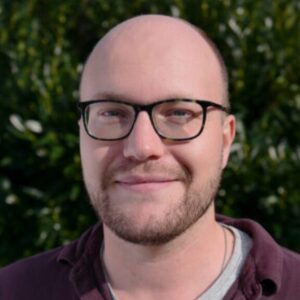
Victor van Dooren is Head of Nature for People (and former Enterprise Manager) at Rewilding Europe and one of the key figures responsible for defining and implementing the European strategy dedicated to creating new nature-based business opportunities through rewilding carried out on the ground. In this interview, he discusses the priorities for the coming years, the potential of the Wilder Places platform, and analyzes the sustained growth of the Wild Côa Network project in Portugal.
 What is Rewilding Europe’s strategy for 2030 regarding the potential that rewilding can have for the socioeconomic development of the countries where it operates?
Our strategy for 2030 is to demonstrate that rewilding isn’t just good for nature—it’s also good for local areas and the people who live there. We want landscapes where nature’s recovery truly creates opportunities: jobs, businesses, investment, and a stronger sense of identity. Our main goal is, together with teams in each country, to build nature-based economies—for example, centered on tourism and local products. If
nature becomes an asset from which people can benefit, then rewilding becomes something sustainable, embraced by the community.
What are the top priorities for action? What are the key economic opportunities to explore and strengthen during this period?
Our top priority is to ensure that nature-based economies actually work on the ground. This means helping local businesses become stronger, more professional, and better connected. The major opportunity we see in the coming years is nature-based tourism, conducted in a way that fits into the landscape and benefits the local population. We see a clear demand for wildlife-related experiences and opportunities for visitors to get hands-on. Strengthening the offerings in these landscapes to meet that demand is essential. To help these tourism service providers reach their audience and match supply with demand, we launched the Wilder Places platform. However, we’re not focused solely on tourism; we’re also seeking new forms of nature-related funding and partnerships, so that revenue for rewilding doesn’t come from a single source.
Prioritizing the human element in the landscape has been a distinguishing factor in the rewilding approach compared to more traditional conservation. Why do this?
Because although these landscapes may be sparsely populated, they are not empty spaces: people live here and run their businesses here. Rewilding doesn’t happen in a vacuum; it has a context. If people don’t see benefits—or worse, if they feel excluded— it simply won’t work in the long run. When local communities are involved and see new opportunities emerging, rewilding becomes something they themselves embrace, support, and protect. Therefore, for us, focusing on people isn’t just a nice-to-have; it’s essential for success.
2026 could be the year the Wilder Places platform comes into its own. What are the prospects for the platform?
Wilder Places is at a very interesting juncture. The groundwork has been laid, and 2026 could be the year it truly proves its worth. We’re already seeing increased interest, in terms of people visiting the platform and asking about experiences. The big question is whether it can consistently attract visitors to landscapes undergoing rewilding and channel real revenue to local businesses while maintaining high quality. If that happens, it could be a powerful tool—not just for one place, but for various European landscapes. This market also helps us gather data on what potential visitors are looking for, which, in turn, allows us to work more strategically with local partners to create new offerings. In terms of offerings, we’re currently working with local partners to increase the number and variety of multi-day trips, day experiences, and stays. We’re also working on a redesign to further improve the user experience and integrate new features and translations into major European languages. Our goal is to cater to a diverse audience, ranging from international visitors seeking longer trips to regional visitors interested in coming for a day or two.
How do you view the consistent growth in revenue from nature-based businesses in the Greater Côa Valley?
It’s very encouraging. The consistent growth shows that this isn’t just a short-term trend or a one-off success. It tells us that the return of wildlife, a compelling narrative about the landscape and the role of nature, and coordinated local businesses can truly transform the local economy. That’s exactly what we hope to see in rewilding landscapes.
Can the ability of nonprofit organizations, such as Rewilding Portugal, to become increasingly financially self-sustaining through tourism lead to greater viability for this type of project?
Yes, absolutely—as long as it’s done wisely. Tourism can provide stable income and reduce dependence on grants, which is a major step toward long-term viability. But it shouldn’t be the sole source of income. When tourism is part of a broader strategy, it can truly strengthen organizations and allow them to reinvest directly in conservation and community work. Another consideration is finding the right balance between working with local tourism businesses and suppliers or doing things on your own. It’s not about competing. The goal should be to “grow the pie” and distribute the benefits among as many businesses as possible to develop a systemic and robust nature-based tourism economy.
The Wild Côa Network is considered a success story. How do you view the maturation of a project that brings together so many businesses around rewilding?
What impresses me most is how the network has matured. It’s no longer just about individual businesses doing their own thing; it’s a group that collaborates, shares a vision, and benefits collectively from rewilding. It’s a network that functions well and is rooted in nature’s return to the landscapes. That kind of cooperation doesn’t happen automatically. It demonstrates trust, good coordination, and a shared understanding that working together makes everyone stronger.
Finally, what surprised you most about the socioeconomic strategy and its implementation in the Greater Côa Valley? Something that all other European landscapes can learn from and apply to their own contexts.
What surprised me most was how quickly the initial momentum builds once people start seeing real results—more visitors, more interest, more pride. The Wild Côa Network is a great example of how bringing together businesses and people with similar ideals can lead to new collaborations centered on a common goal. For me, the key lesson for other regions is this: treat socioeconomic development with the same seriousness as ecological restoration. If we invest in people, businesses, and networks from the very beginning, the restoration of nature has a real chance of translating into long-term prosperity.