
In the natural world, the balance of a landscape rarely depends on a single species, even when that species fulfils similar functions. On the contrary, it arises from diversity, interaction and time. It is precisely this principle that lies at the heart of one of the main objectives of rewilding in Portugal: the return of mixed herds of large herbivores living in a semi-wild state.
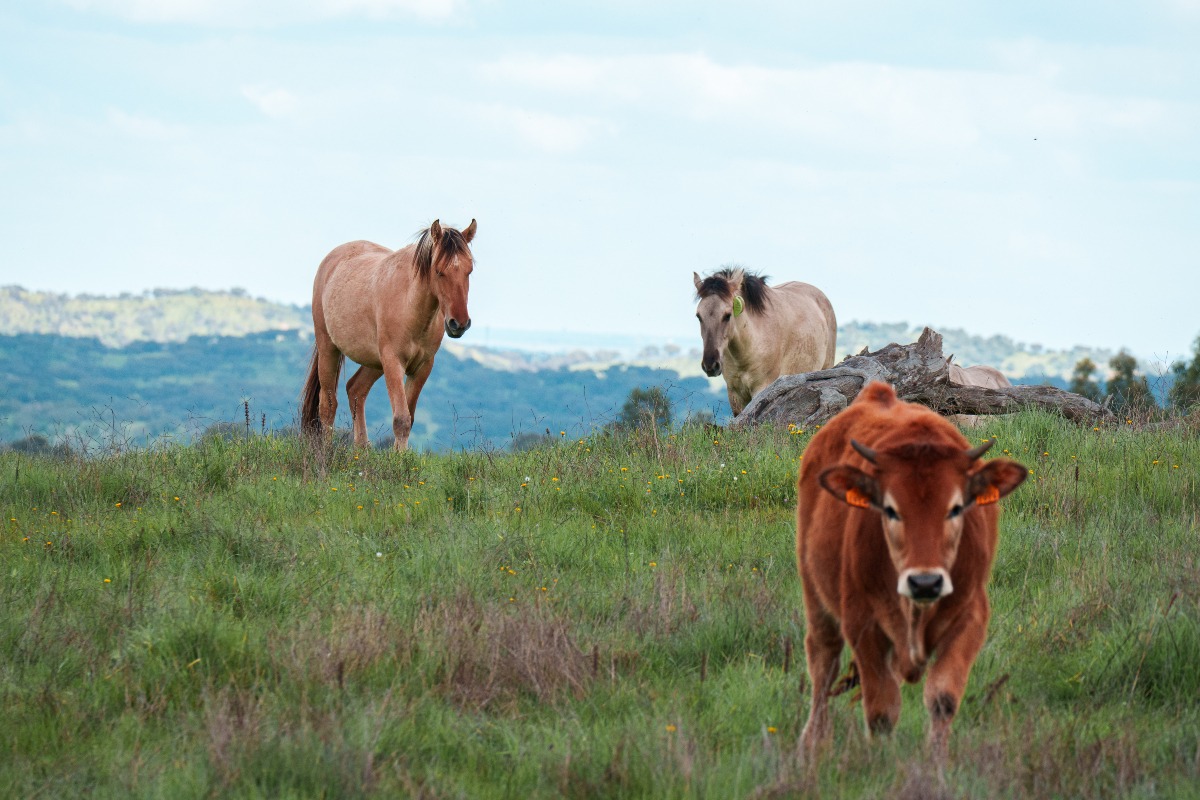
Thanks to the work carried out by Rewilding Portugal, this scenario is already beginning to take shape in the Ermo das Águias rewilding area, a pioneering project in this field. Sorraia horses and Tauros now share the same territory, recreating the natural dynamics that for centuries shaped the Portuguese landscape when large, truly free-roaming herbivores still roamed the countryside. This project offers a first glimpse of these dynamics, but it requires time and, increasingly, more space for these animals to move and disperse in order to replicate the dynamic structure to which we wish to return within an ecosystem.
But why is it so important to bring together different species of herbivores? The answer lies in the way each animal relates to its environment. Horses and cattle feed on different plants, graze in different areas and move in their own distinct ways. This complementarity creates a true natural mosaic: areas of shorter vegetation alternate with denser zones, giving rise to clearings, refuges and new opportunities for insects, birds and small mammals. Where there is diversity of herbivores, there will consequently always be more life.
Just as a healthy forest does not consist of a single species of tree, open ecosystems also benefit from the presence of various large herbivores of different sizes, for example. The interactions between these species trigger essential ecological processes, promoting a more effective and resilient natural restoration than any isolated artificial intervention.
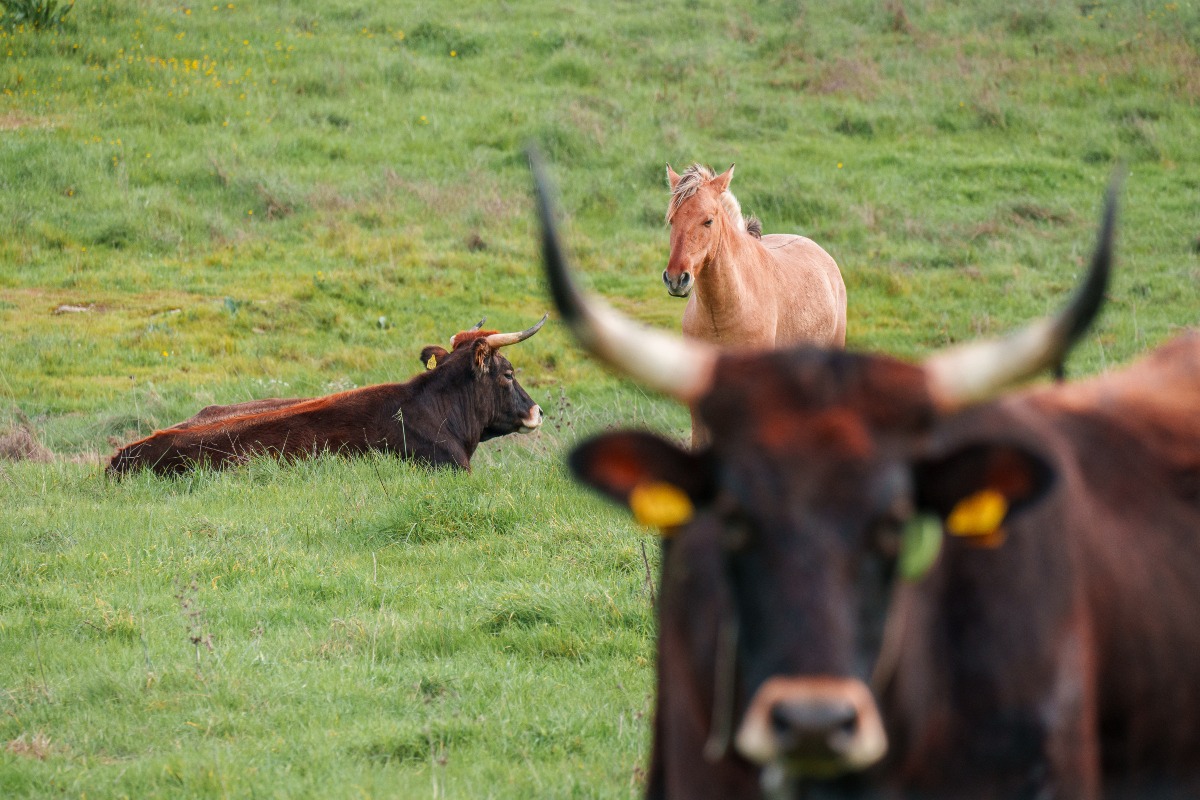
In addition to the ecological benefits, mixed herds play a key role in land management. By controlling vegetation continuously and naturally, they reduce forest fuel and help to lower the risk of fires, offering a solution that is less costly and provides greater long-term benefits. In the future, these herds may also contribute to a healthier balance with large predators, such as the Iberian wolf, by acting as natural prey and helping to reduce pressure on domestic livestock. They may therefore also come to act as true champions of coexistence with large predators in more rural areas.
Step by step, rewilding is restoring lost processes, a wild rhythm and ecological balance to the Portuguese landscape. Because when nature functions as a whole once more, everyone wins – biodiversity, the land, and the communities that depend on it and that still live there and carry out their activities.