

The restoration of this structure, led by Rewilding Portugal, highlights an important reminder of the historical presence of wolves south of the Douro. Inaugurated this weekend, it forms part of the efforts to promote coexistence with the Iberian wolf under the LIFE LUPI LYNX project, bringing together heritage, artistic creation and a new walking trail.
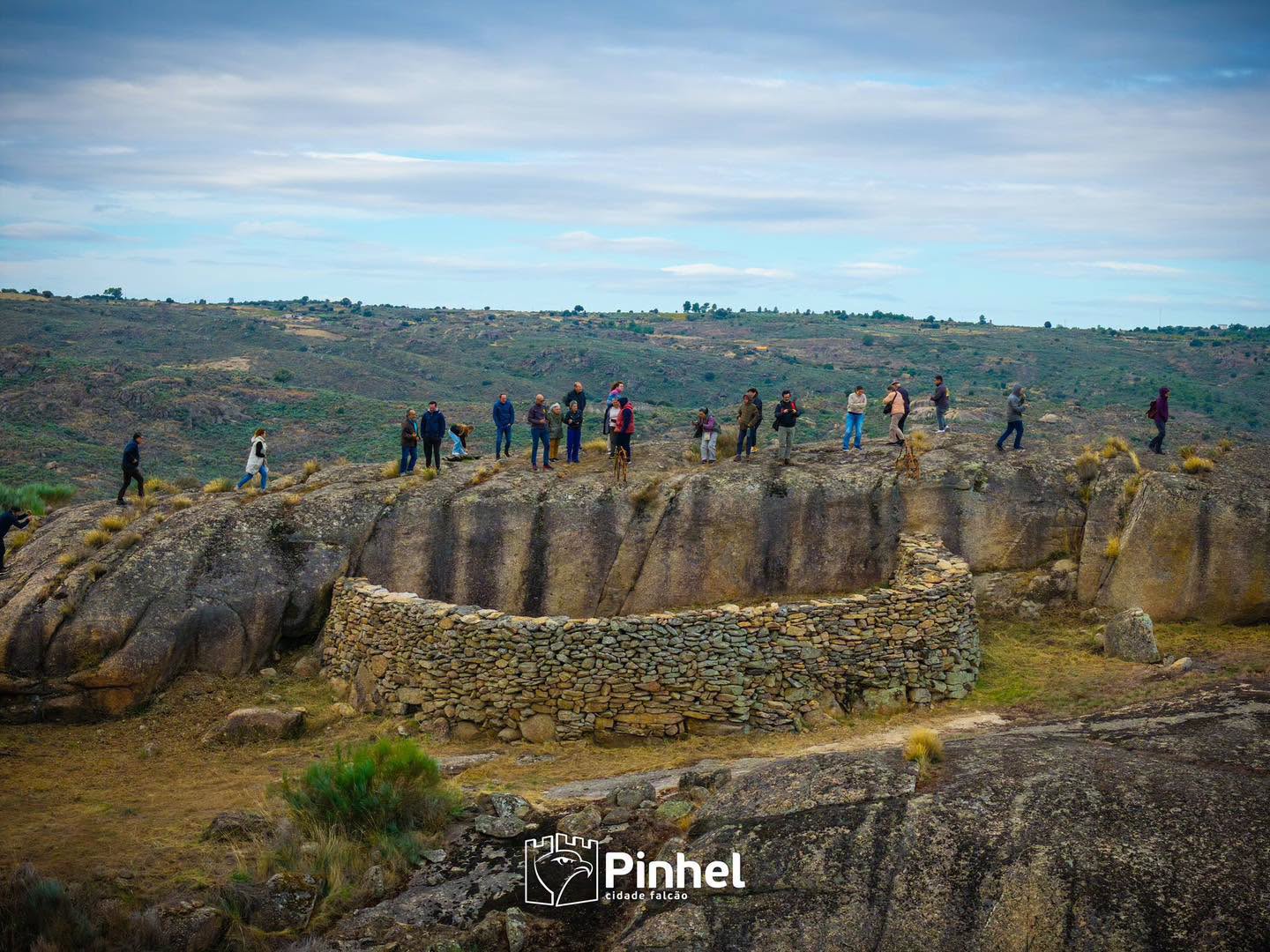
The Wolftrap located in the Ermo das Águias rewilding area, in the parish of Alto do Palurdo, in the municipality of Pinhel, was inaugurated on Sunday, 18 October, at an event organised by Rewilding Portugal in partnership with the Municipality of Pinhel. The restoration of this historic structure brings renewed attention to a heritage site that helps explain the longstanding relationship between local communities and the Iberian wolf, creating a new place for landscape interpretation, education and visitor experiences in the Greater Côa Valley.
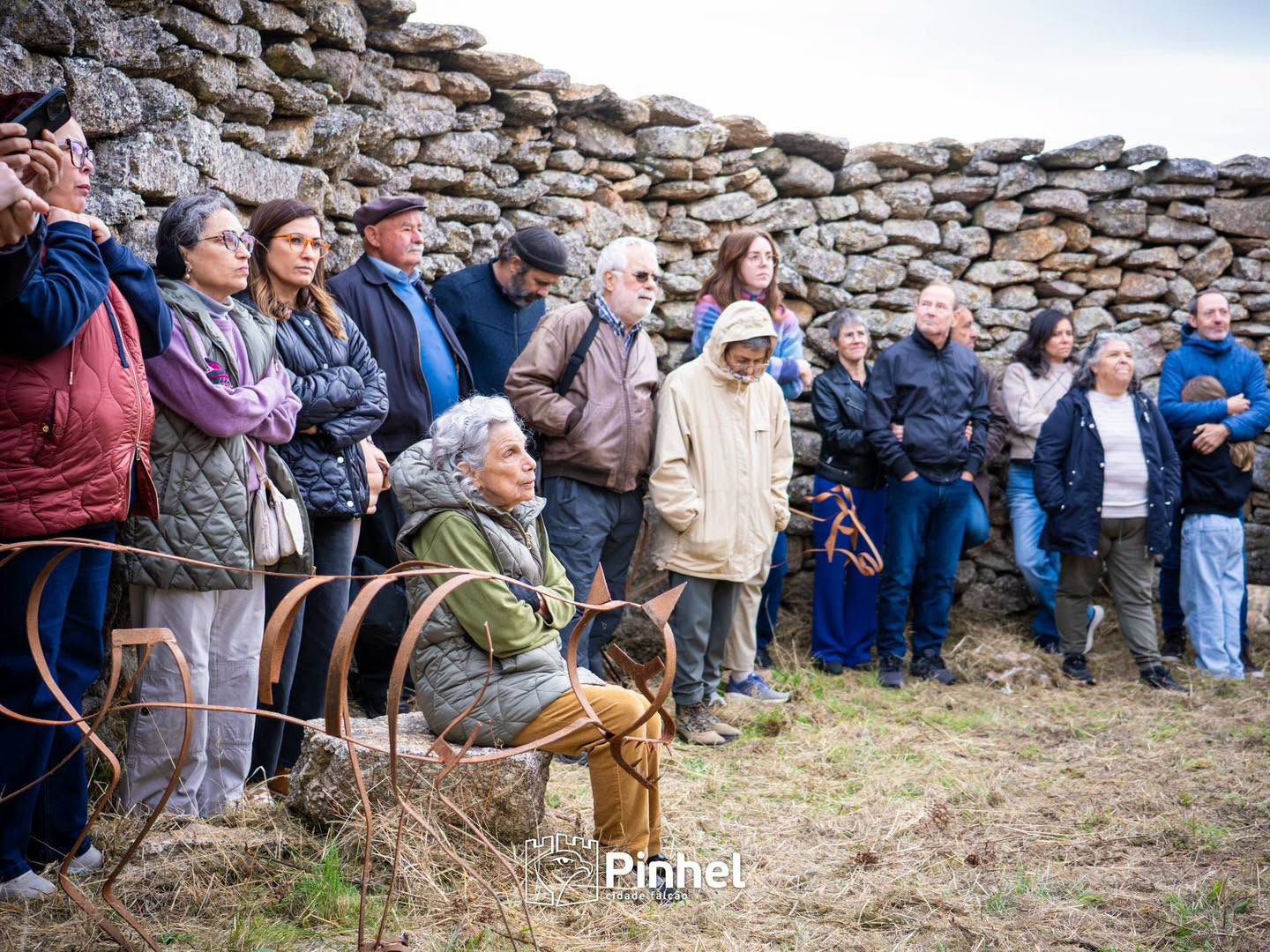
Part of Pinhel’s programme as the LIFE LUPI LYNX project’s Ambassador Municipality for 2026, the inauguration was attended by the Mayor of Pinhel, Daniela Capelo, Rewilding Portugal’s Executive Director, Pedro Prata, artist Rui Miragaia and researcher Francisco Álvares, alongside many other enthusiasts, specialists and members of local communities. The gathering offered an opportunity to explore the restored structure and the artwork created for its interior, bringing together the history of the landscape and knowledge of Iberian wolf ecology and conservation.
During the event, Rui Miragaia presented the creative process and meaning behind his work, while Francisco Álvares discussed the historical presence of wolves in these landscapes, their relationship with human communities and the challenges of their conservation. The visit also provided an opportunity to reflect on the value of wolftraps as physical reminders of a shared history between people and wildlife. The “Pinhel Fora-de-Estrada” off-road club also supported the event by helping to transport participants.
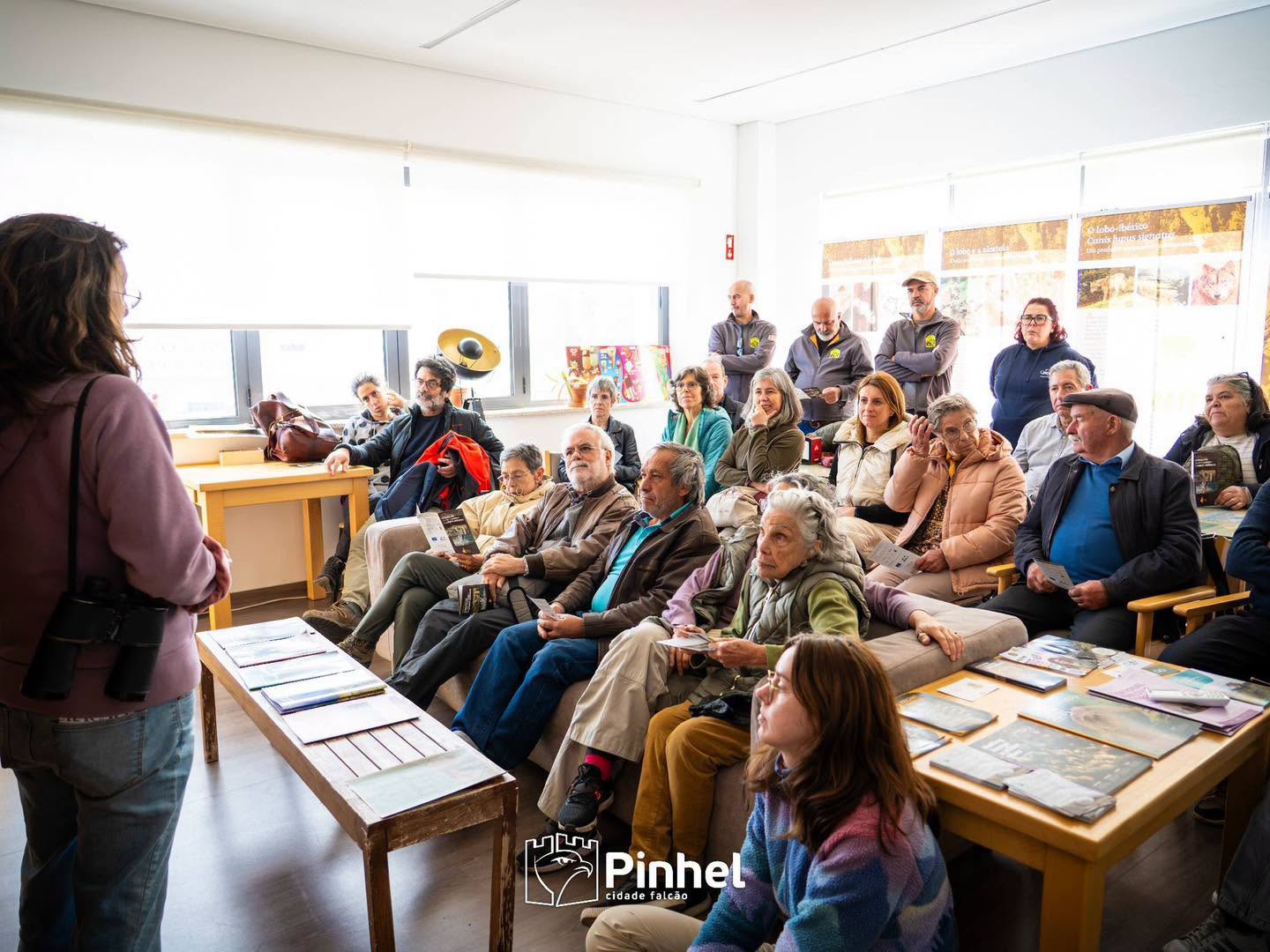
The Sunday event then concluded at the Rewilding Centre, in Vale de Madeira, with a screening of the documentary “Variações Naturais – Sobre a nossa, nem sempre pacífica, convivência com lobos” (Natural Variations – On our not always peaceful coexistence with wolves).
Preserving the memory of a wolf landscape
Wolftraps are historic structures designed to capture wolves, built at a time when protecting domestic animals was central to the livelihoods of rural communities. They therefore embody a tangible aspect of the relationship between human populations and this predator, shaped by proximity, conflict and efforts to safeguard livelihoods.
The structure at Ermo das Águias belongs to a type known as “fojos de cabrita”: stone-walled enclosures into which wolves were lured using an animal as bait. The design allowed the predator to enter while making it difficult to escape.
Its location south of the River Douro makes it particularly significant. The vast majority of known wolftraps on the Iberian Peninsula are concentrated in northern mountain areas, particularly the Peneda and Gerês ranges. The identification of a wolftrap of this type in the municipality of Pinhel has broadened knowledge of the distribution of these structures in Portugal and of historical practices associated with the presence of wolves.
Preserving this heritage keeps alive the memory of Pinhel and the Côa region as a wolf landscape and passes on knowledge about pastoralism, community organisation and landscape change to new generations. The restoration also provides a starting point for discussing coexistence today, acknowledging the difficulties of the past and introducing the tools now available to reconcile the conservation of the species with human activities.
“This wolftrap is part of the region’s memory and of a recent past in which wolves lived very close to local communities. Preserving it allows us to acknowledge the challenges that this relationship posed for people and create a space to talk about the future. We want visitors to better understand the role of wolves in functioning ecosystems and learn about solutions that can help protect livestock and make coexistence possible. By connecting heritage, art and conservation, we are also creating new reasons to discover and value this landscape,” says Pedro Prata, Executive Director of Rewilding Portugal.
An artwork that brings visitors closer to wildlife
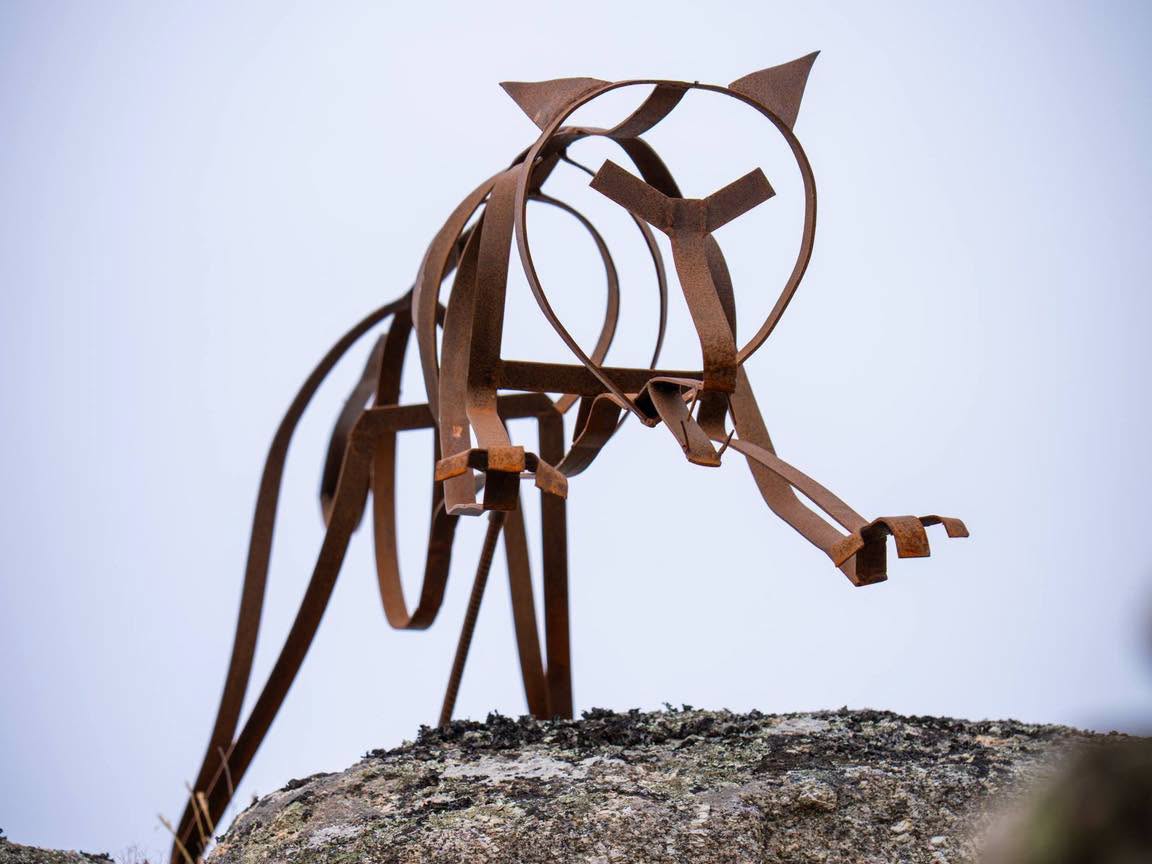
A sculptural installation by Rui Miragaia has been placed inside the wolftrap, depicting life-size wolves hunting an Iberian ibex. The work adds an artistic and interpretative dimension to the visit, inviting the public to consider the wolf as a predator and an integral part of ecosystems.
The combination of the historic structure and contemporary artwork offers a way to explore different aspects of our relationship with the species: the memory of its persecution, its ecological role and the need to create the conditions for coexistence. The restored wolftrap thus becomes a place where cultural heritage and nature conservation meet.
An action integrated in LIFE LUPI LYNX
The inauguration of the restored Ermo das Águias Wolftrap forms part of the LIFE LUPI LYNX project, coordinated by Rewilding Portugal and co-funded by the European Union through the LIFE Programme. This cross-border initiative seeks to create favourable social and ecological conditions for the recovery and natural expansion of the Iberian wolf and Iberian lynx in areas south of the River Douro, in Portugal and Spain.
The project combines habitat restoration and increased availability of wild prey with measures to prevent livestock losses, scientific monitoring, training for local stakeholders and the prevention of wildlife crime. It also includes education and awareness-raising activities and the development of economic opportunities linked to nature, involving communities in the conservation of these species and their habitats.
Alongside Rewilding Portugal, the consortium brings together Associação BIOPOLIS/CIBIO, Grupo Lobo, the University of Aveiro (CESAM) and, in Spain, WWF España.
In this context, enhancing the wolftrap contributes to the project’s social and educational work: learning about the history of wolves and understanding their relationship with the landscape helps promote an informed debate on conservation and coexistence.
New trail and regular visits
The restoration was accompanied by the creation of a walking trail within Ermo das Águias, a rewilding area managed by Rewilding Portugal, providing access to the wolftrap and an opportunity to discover the surrounding landscape.
Rewilding Portugal will soon organise regular guided visits to introduce the wolftrap, the artwork and the history of wolves in the region. These experiences will connect the discovery of local heritage with the ecological restoration work underway at Ermo das Águias, strengthening the links between nature, culture and local communities.
Through this restoration, Rewilding Portugal aims to ensure that the memory of the wolf remains accessible and embedded in the identity of the landscape, while contributing to new opportunities for education, visitor experiences and appreciation of the Greater Côa Valley.