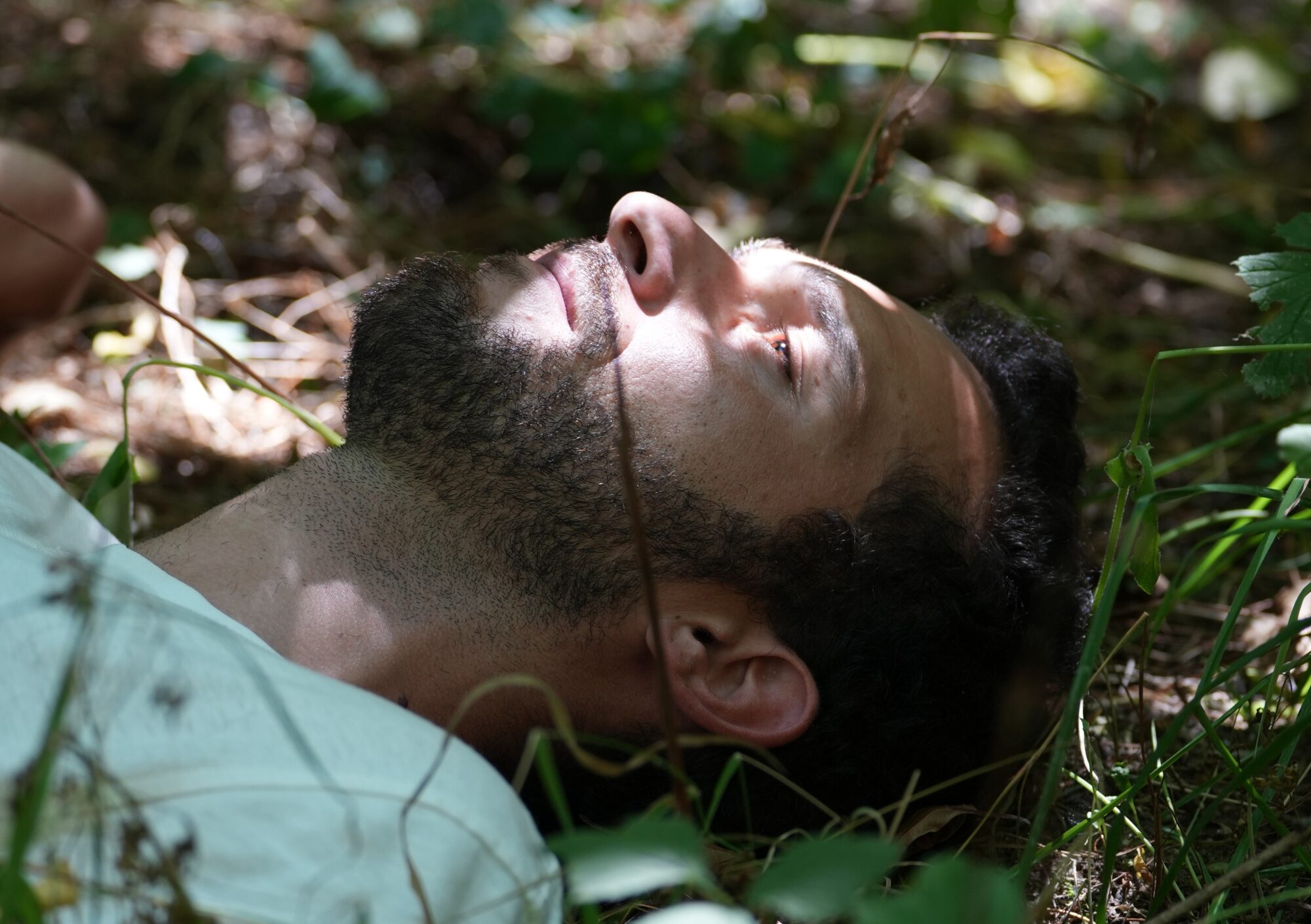

After Helena and Cantinho Café, the Those Who Stay series takes us now to the Serra da Malcata, one of the quietest corners of the Greater Côa Valley. It is here that Tiago guides forest bathing, a practice born in Japan, shinrin-yoku, which comes down to something as simple as it is rare. Being in the forest with all your senses open, without haste and without a destination.
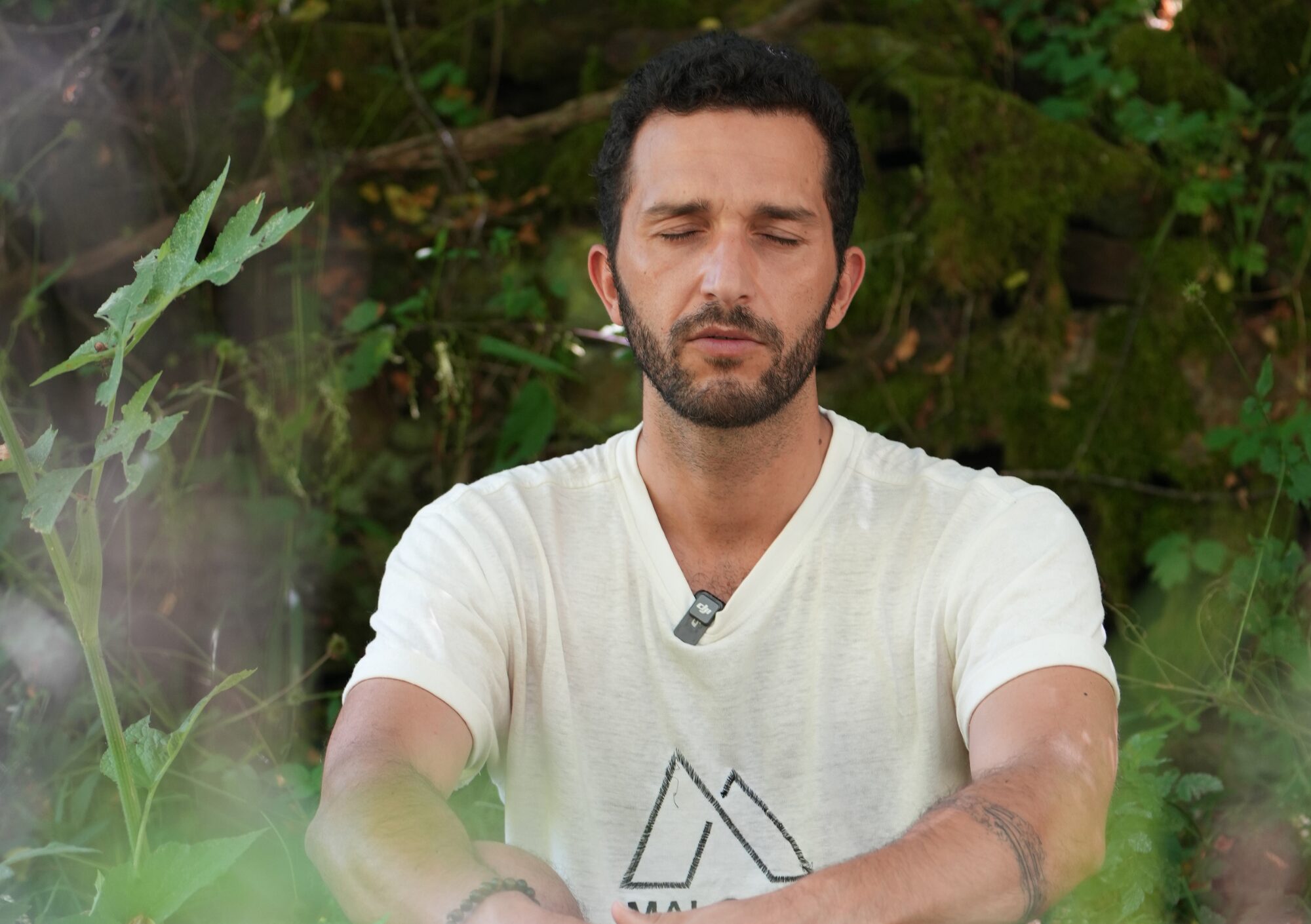
Those Who Stay · Tiago Alves, Malcata Eco Experience, Serra da Malcata
He spent much of his life by the sea, in the urban coastal strip. One day he swapped it for the interior and the mountains, without feeling he was losing anything. “It is in these territories that I have my roots,” he says, “so it was a natural change.” What holds him is the serenity these landscapes give off, the turning of the seasons, each with its own “tones, aromas and symphonies”. And, above all, a different relationship with time. Here, he says, “time feels like just a concept and not an imposition”. It was in the Malcata that he felt his true self.
Forest bathing has little to do with a guided walk. Those who come are almost always in search of the beautiful, of something external to “capture”. The initial wonder enters through the eyes. But Tiago has learnt to recognise the moment when something shifts, when the other senses awaken with each step deeper into the woods and the mind begins to yield to what surrounds it. That moment arrives when a person starts to notice what is right in front of them. “That is when a person truly arrives,” he explains. “When the micro gains scale in their perception.”
Those who seek him out are mostly curious, nature lovers who for the most part have no idea what to expect. The profiles vary widely, and each person brings their own way of being. With couples and families, the sessions take on another depth, with the forest serving as a safe space for emotions that bring people closer. Children look at everything “almost like a sensory laboratory”. And older people recognise in those greens and blues the settings of their own childhood, and bring a genuine wish to share memories and knowledge. It was with one of those groups that he lived one of his most memorable experiences, a forest therapy over the course of six weeks with fifteen people from the Universidade Sénior do Sabugal. Each session in a different place, each meeting full of stories and of “folk remedies” made with the plants they found along the way. “I learnt a great deal from them,” he says, “and I felt fortunate.”
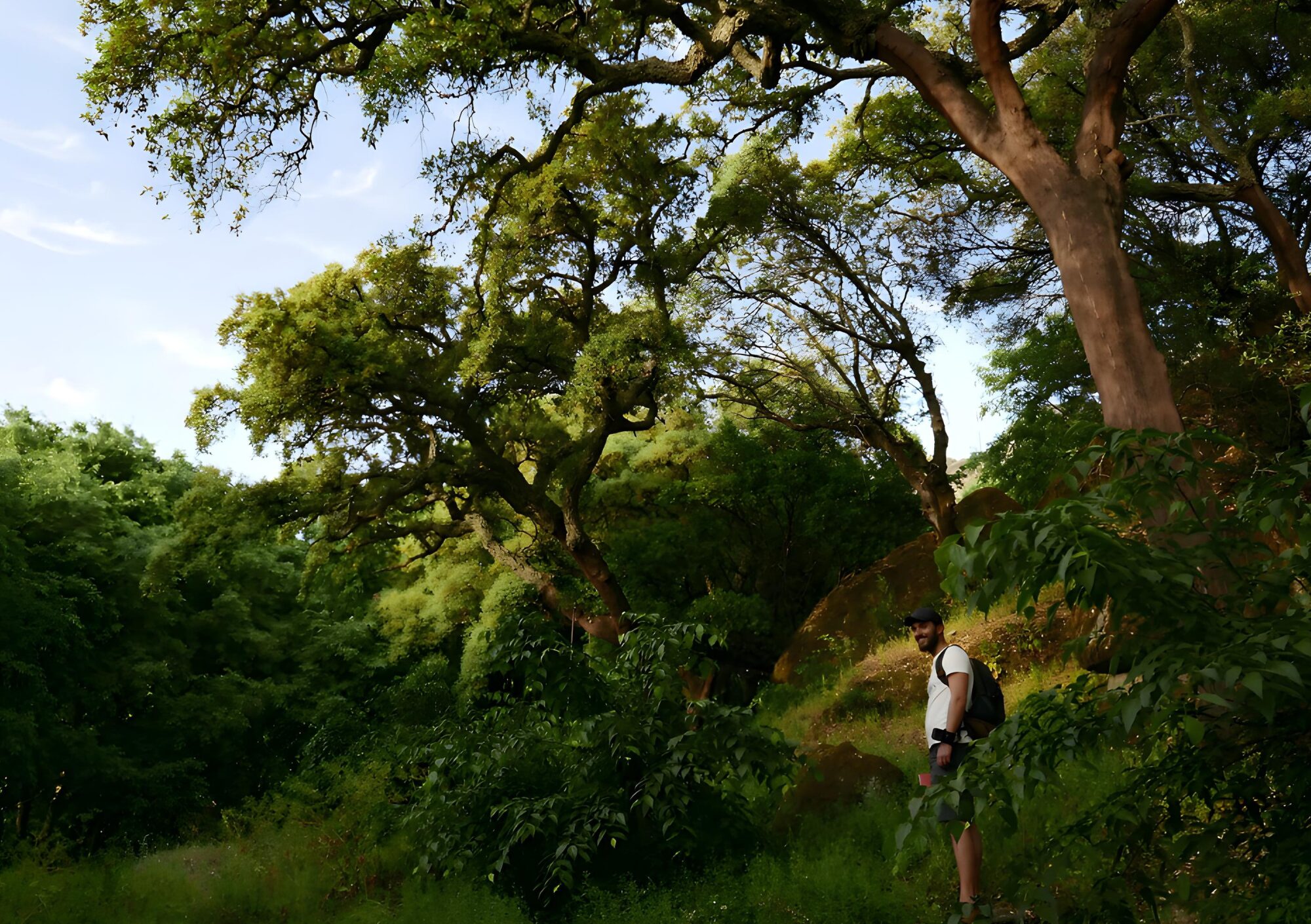
One might think that, once it becomes a profession, the magic wears off. The opposite happens. The guide is not left out, he is almost always an active participant, and the same place returns different sensations depending on the season or his own state of mind. Nature, he reminds us, is “a living organism in constant transformation”. What surprises him most is the way people live that organism. Often, in the middle of the silence, someone recalls a memory of their own, or of someone who has passed, and shares it there, without fear of judgement, in a space where silence is also welcome.
Asked what the Malcata has that cannot be found in the same way anywhere else, Tiago hesitates before answering. The mountains, he says, are full of meaning, through the identity of their people and the fight for their preservation, whose echo still lives in the community’s memory. For him, it is a “borderland” between civilisation and an ancient heritage, a reunion with the wild, and it was always these places on the edge that fascinated him. “It was in the Serra da Malcata that I found my silence,” he says, “and I felt that silence deserved to be shared.”
When we ask how he gets people to let go, his answer is disarmingly humble. “It is the person themselves who, little by little, lets themselves be carried by their senses,” he explains. “My role is simply to create spaces and offer the right invitations.” We live our lives full of routines, and he is convinced that an afternoon among trees has, on its own, the power to give us back to ourselves.
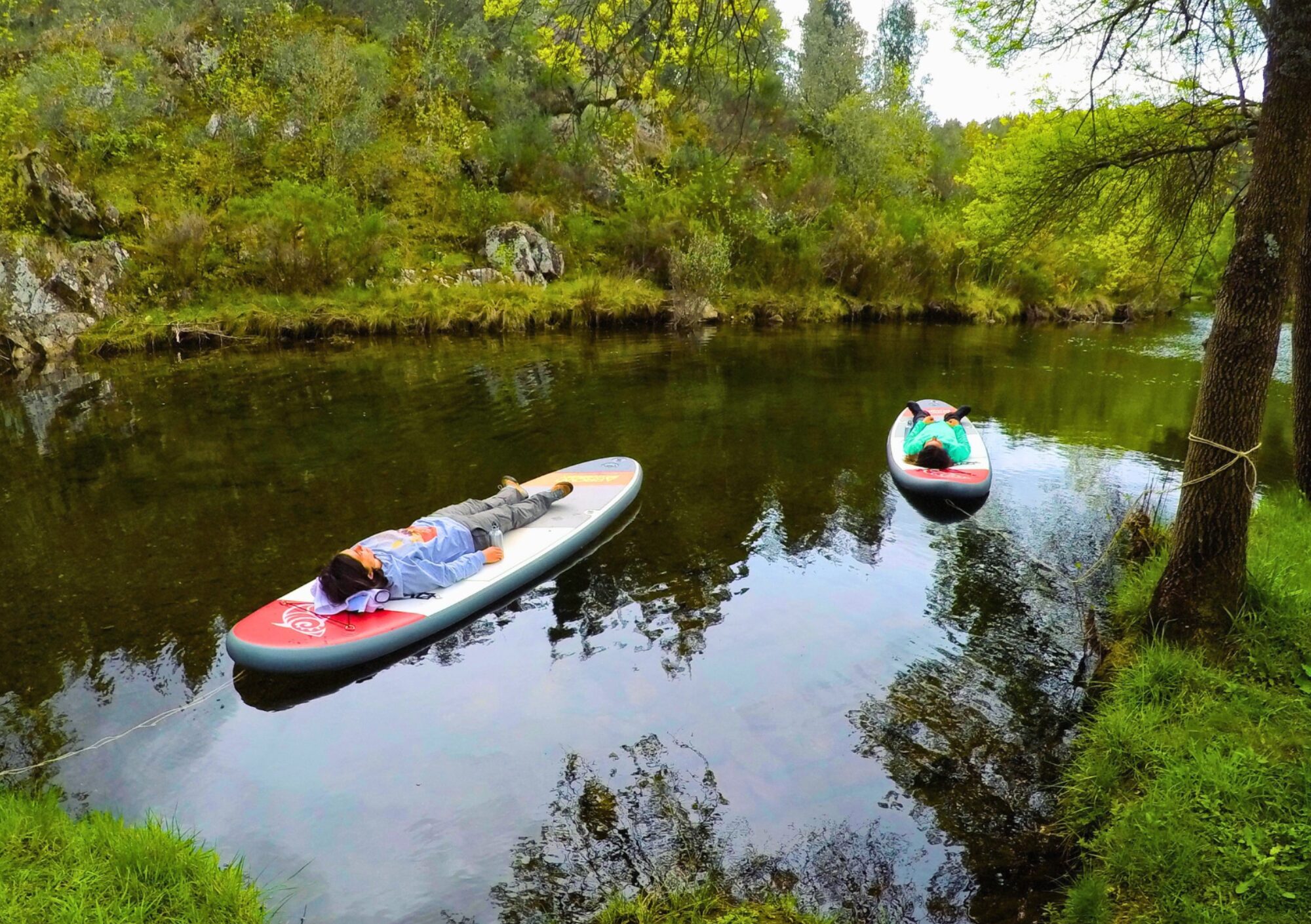
This is where Tiago’s work meets the philosophy of this territory. Creating spaces and offering the right invitations is, in essence, what rewilding does with the landscape. It prepares the conditions and gives time, letting nature run its course. He does the same with people.
And it belongs to an idea that gathers more and more force, the notion that nature heals. It is an old conviction that is only now beginning to earn the recognition it deserves. In July, the Mata do Buçaco became the first certified Therapeutic Forest in the Iberian Peninsula, one of only four in the world. But anyone who has felt the effect of a whole morning among trees knows you do not need a certificate to prove it. All contact with nature holds that power, and it is likely that, in the near future, this will stop being news and become a given.
There is one last idea of Tiago’s that lingers far beyond the forest. That we only truly arrive at a place when the small gains scale, when we notice the detail that at first passed us by. It is, in essence, what is happening to this territory. On its own, each project is a small thing, a guesthouse, a beer, a farm, a forest bath. Seen together, they gain the scale of a valley coming back to life. That is the Wild Côa Network, and that is what Tiago does, in his own way, with each person he takes into the woods.
In the end, what he would like to remain is simple. That people carry with them the certainty that nature transforms us, and that it is worth every effort to protect it. And so the invitation stands, more personal than any other. Come to the Serra da Malcata and look at nature, unhurried. Somewhere in the middle of the silence, you may well realise that to look at it is also a way of looking within yourself.
Malcata Eco Experience is a member of the Wild Côa Network. Book your experience and come and find your own silence.
Interview and editing by Visit Greater Côa Valley.