

Rewilding Portugal’s official position on the revised Sophia Solar Photovoltaic Power Plant project and its associated extra-high-voltage power line
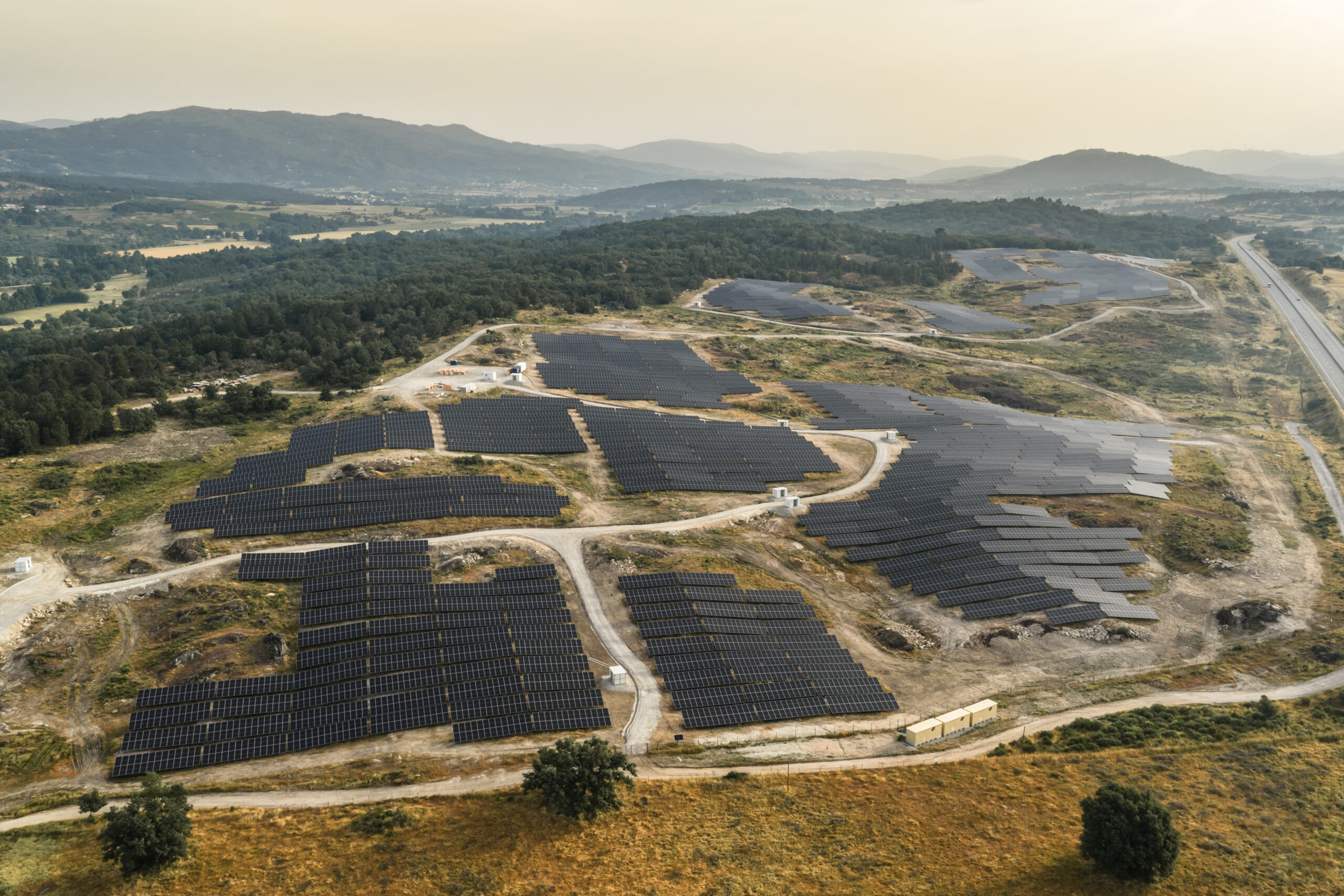
Rewilding Portugal maintains its opposition to the Sophia Solar Photovoltaic Power Plant and its associated extra-high-voltage power line, even after the substantial revisions submitted by the developer under Article 16 of Portugal’s Environmental Impact Assessment legal framework.
This position follows our analysis of the documentation now available and reflects the persistence of significant ecological risks in an area of high natural value, particularly important for connectivity between the ecosystems of Beira Interior and natural areas across the Portugal–Spain border.
In November 2025, Rewilding Portugal publicly opposed the original project, highlighting its impacts on biodiversity, ecological corridors, local communities and nature-based tourism. This position formed part of an unprecedented public consultation process in Portugal, with 12,693 submissions, which contributed to a fundamental debate about the environmental limits of the energy transition.
We acknowledge that this process brought tangible results. The revised proposal introduces important improvements, addressing some of the concerns previously identified. However, reducing the scale of a problem does not necessarily mean resolving it. And reducing harm to nature does not make that harm acceptable.
We continue to maintain that the energy transition is urgent and essential, but it cannot come at the expense of biodiversity, ecosystem integrity and the potential for wildlife recovery. The climate emergency cannot justify deepening the other major environmental crisis of our time: the accelerating loss of biodiversity.
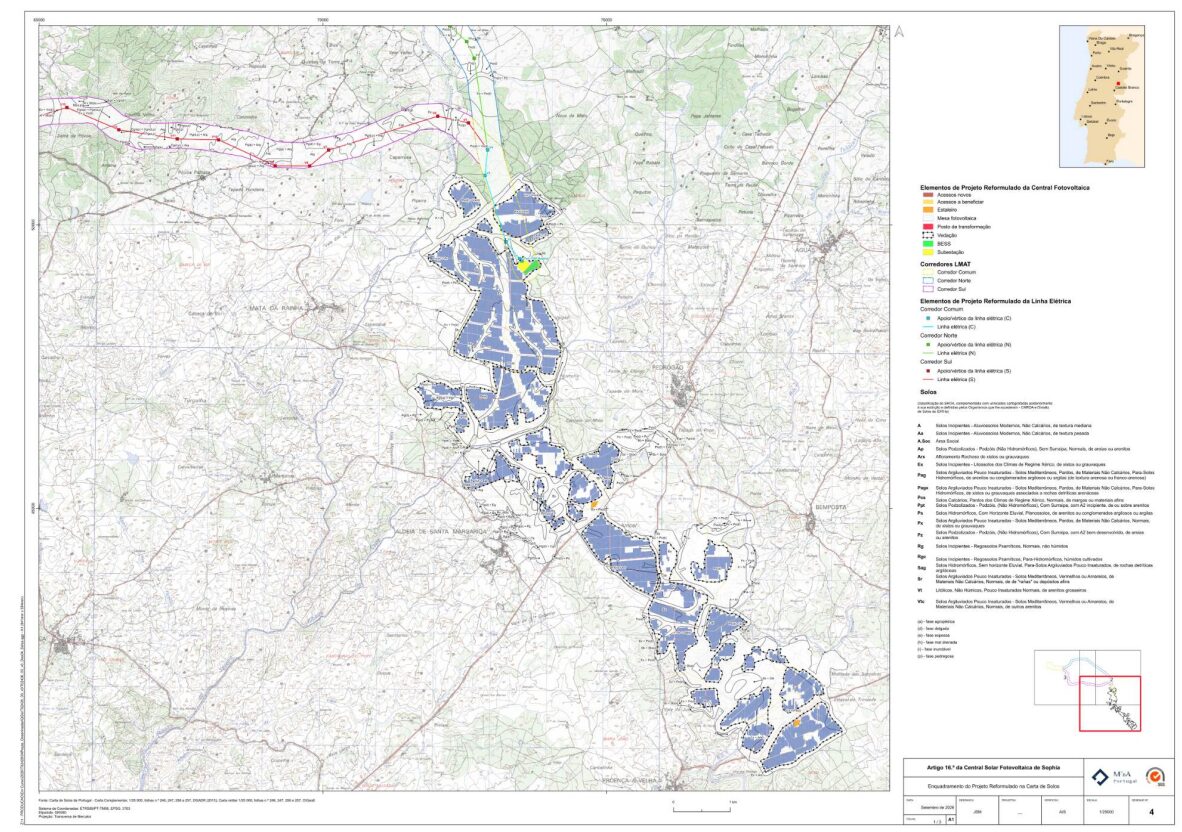
A different project, but still far from environmentally acceptable
1. BIODIVERSITY: nature needs space, continuity and freedom of movement
The area of Beira Interior where the Sophia project is proposed comprises a mosaic of Mediterranean habitats, traditional farmland, forest stands, watercourses, and natural and semi-natural areas that perform essential ecological functions. More than a collection of land parcels, this is a living landscape that enables animal movement, species dispersal, genetic exchange between populations and connections between different natural areas.
Its location in a border region makes this role particularly important. Nature does not recognise political borders, municipal boundaries or administrative divisions. Wild species depend on continuous, permeable landscapes, including ecological connections between Portugal and Spain, that allow them to move, find food, reproduce and colonise new areas. The revised project sought to address the disruption of the Raia Norte and Raia Sul ecological corridors identified in our previous position. The removal of entire sectors and the preservation of wildlife passage areas represent important improvements.
But corridors drawn on a map do not, in themselves, guarantee ecologically functional connections. A landscape with hundreds of fenced hectares, energy infrastructure, access roads and significant changes to vegetation cover may still restrict wildlife movement, even where designated corridors remain formally unoccupied.
Fencing that allows small animals to pass through does not demonstrate its suitability for larger mammals. Similarly, preserving strips of vegetation does not guarantee that they have the width, continuity, freedom from disturbance and ecological quality needed to support regular wildlife movement. This is particularly important for mammals such as the Iberian wolf and for the potential future dispersal and range expansion of the Iberian lynx, as well as countless other species that depend on connected habitats.
The fact that a species is not currently confirmed as regularly present in an area does not make that area irrelevant to its future conservation. On the contrary, as Portugal and Spain seek to recover threatened species populations, increase natural prey availability and restore ecological corridors, preserving the areas that could enable their expansion is essential.
We cannot continue investing in wildlife recovery while simultaneously compromising the spaces on which that recovery will depend over the coming decades. Conservation cannot be limited to protecting the nature that remains. It must also secure space for the nature we want to restore.
Birds remain exposed to risks that have not disappeared
The revised proposal introduces relevant improvements for some of the Iberian Peninsula’s most threatened bird species. The distance from the Iberian imperial eagle’s territory has increased from approximately five to 8.3 kilometres, while the distance from the cinereous vulture roost identified nearby has also increased significantly.
These are positive changes, demonstrating the importance of considering species distribution and ecological requirements when locating infrastructure of this scale. However, the revised environmental report itself acknowledges that the southern end of the power plant still partially overlaps an area classified as highly critical for birds, associated with the black stork, one of the species most sensitive to human disturbance and habitat alteration.
The proposal also retains a new extra-high-voltage power line, which will continue to pose a collision risk to birds. Reducing the number of lines from two to one decreases the extent of the proposed new infrastructure, but does not eliminate the danger. Particularly in a region used by large birds, including threatened species, adding aerial obstacles creates further pressure on populations whose recovery requires sustained conservation efforts.
The submitted studies include monitoring data from an existing power line in the region, Nave da Mata–Ferro, indicating an estimated mortality rate of 11.4 birds per kilometre per year during the first year of monitoring. These results cannot directly predict mortality along the new line, but they demonstrate that collision risk is not merely hypothetical. It is already documented in this landscape. Bird flight diverters and monitoring programmes are necessary, but they do not guarantee that no birds will die.
For threatened species, the additional loss of individuals can have disproportionate consequences, particularly when combined with other causes of mortality and disturbance. We cannot accept future monitoring as a substitute for the present obligation to avoid creating new risks wherever possible.
Natural habitats cannot be replaced by promises of tree planting
Another of Rewilding Portugal’s central concerns remains habitat transformation and the loss of native vegetation. We welcome the greater concentration of the power plant in areas currently occupied by eucalyptus plantations, as well as efforts to preserve cork oaks, holm oaks and other important vegetation features. However, the project still entails land-use changes and interventions in a landscape containing Mediterranean habitats, natural and semi-natural vegetation, and species of high conservation interest.
The species identified in the original study include Bufonia macropetala, a rare plant endemic to the Iberian Peninsula, whose presence reinforces the importance of safeguarding the habitats and ecological conditions that sustain it. The revised proposal also includes compensation measures, such as planting an estimated 40,000 trees and restoring areas with native species.
But planting trees is not the same as conserving an ecosystem. An established cork oak or holm oak woodland, with developed soils, diverse plant communities and established ecological relationships, cannot immediately be replaced by a new plantation. Recovering this ecological complexity may take decades, with no guarantee of success. Proposed compensation measures must be assessed according to the ecological outcomes they actually achieve, rather than simply the area covered or the number of trees planted.
We therefore continue to consider the evidence insufficient to demonstrate that the proposed measures fully compensate for the residual losses of habitats and biodiversity. Nature is not a balance sheet in which every felled tree can be accounted for by planting another. An ecosystem’s value lies in the relationships it sustains, the life it supports and the natural processes it enables.
The danger of cumulative impacts: when every project occupies just one more piece of land
For Rewilding Portugal, this is one of the most concerning aspects of the revised proposal. The environmental report itself acknowledges that, despite the changes introduced, significant cumulative impacts on wildlife and the landscape remain, resulting from the concentration of energy projects in the region.
The Sophia power plant does not exist in isolation. Its surroundings include other existing or planned solar power plants, electricity infrastructure, substations and energy generation facilities, including projects such as Fajarda, Juncal and Fundão-Penamacor. Individually, each project may offer mitigation measures, preserved corridors and compensation commitments. But the combined effects of these interventions can be far greater than an assessment of each project in isolation would suggest.
This is how landscape fragmentation progressively intensifies. A fence here, a power line there, a feeding area lost further away, a new access road, another array of panels, another area of disturbance. None of these interventions needs to constitute an absolute barrier on its own for their combined effect to compromise wildlife movement and ecosystem functioning.
In a region that connects natural areas in Portugal and Spain, this accumulation of pressures is particularly concerning. The risk extends beyond immediate habitat loss. It includes the potential to reduce connectivity between populations, hinder juvenile dispersal, restrict seasonal movements, reduce opportunities for recolonisation and compromise ecological resilience to climate change, wildfires and other disturbances.
What is at stake is not only the biodiversity we may lose today, but also the biodiversity we may prevent from returning tomorrow. Rewilding Portugal believes this requires an integrated assessment of the wider landscape, capable of establishing ecological limits to the concentration of energy infrastructure, instead of continuing to assess individual projects successively within an increasingly pressured landscape.
2. COMMUNITIES: fewer impacts do not mean no consequences
The revised proposal also introduces improvements in the project’s relationship with local communities, notably through increased distances from settlements, homes, trails and areas of tourism interest. We also acknowledge the submission of a Community Engagement Plan and a Shared Benefits Programme.
These respond to legitimate concerns raised during the public consultation. However, it remains necessary to demonstrate that the promised benefits will be tangible, proportionate, lasting and genuinely shared with the people who will live with the infrastructure’s impacts. Occupying such a substantial area will continue to change traditional land uses, transform the rural landscape and constrain future development opportunities based on natural resources.
Communities in Beira Interior have faced decades of depopulation, ageing and loss of services. Many have sought new opportunities by investing in natural heritage, sustainable agriculture, local products and nature-based tourism. The energy transition must not reproduce a model in which sparsely populated areas bear the main landscape and environmental costs of infrastructure serving national energy needs, without guarantees of proportionate benefits.
Environmental justice requires more than compensation measures. It requires communities to have a meaningful role in decisions that shape the future of their territories.
3. NATURE-BASED TOURISM: the natural landscape is an economic asset we cannot continue to compromise
Beira Interior has increasingly established itself as an area with growing potential for nature-based tourism, wildlife watching and experiences centred on natural and cultural heritage. Serra da Gardunha, the borderlands, Malcata and the Greater Côa Valley form part of a landscape of major ecological importance, whose identity also depends on the continuity of natural areas and the presence of wildlife.
The reduction in the Sophia project’s scale and its increased distance from some points of interest represent improvements in its integration into the landscape. However, infrastructure of this scale, alongside other energy projects in the same region, will continue to cause significant landscape changes.
The issue goes beyond whether panels are visible from a particular viewpoint or tourist trail. It also concerns the gradual transformation of a region’s identity and the potential loss of the ecological quality that underpins its appeal. Nature-based tourism depends on functioning landscapes, biodiversity and opportunities to experience natural environments. Degrading these assets can undermine investments and development strategies designed precisely to reconcile nature conservation with local economic opportunities.
Through the Wild Côa Network, Rewilding Portugal has supported the development of businesses demonstrating that ecological recovery can create tangible economic opportunities for rural areas. We cannot advocate a nature-based economy while simultaneously accepting the progressive replacement of the natural assets that sustain it with industrial infrastructure.
The energy transition cannot continue to undermine the ecological transition
Rewilding Portugal reaffirms its commitment to decarbonisation and the development of renewable energy. We do not question the need to produce clean energy. We question how certain infrastructure projects are planned, located and assessed, particularly when they threaten ecological assets that Portugal has committed to conserving and restoring.
The revision of the Sophia project demonstrates that alternative layouts exist and that impacts can be significantly reduced when nature protection is properly considered. But it also demonstrates that some limits cannot be overcome through mitigation or compensation measures alone.
Portugal needs an energy strategy that prioritises, wherever technically and environmentally viable, already developed surfaces, buildings, industrial zones, degraded areas and decentralised generation, avoiding areas essential for biodiversity conservation and ecological connectivity. It is equally essential that the planning of large renewable energy facilities considers cumulative impacts on landscapes and biodiversity, establishing clear exclusion criteria and safeguards for strategic ecological corridors.
Climate urgency cannot justify decisions that could compromise the recovery of ecosystems and threatened species for decades. The climate and biodiversity crises are deeply interconnected. We cannot adequately address one while continuing to aggravate the other.
Our position remains unchanged: an unfavourable opinion on the Sophia project
Having reviewed the documentation submitted, Rewilding Portugal acknowledges the improvements introduced in the revised Sophia Solar Photovoltaic Power Plant proposal and considers them a meaningful response to some of the concerns raised during the public consultation.
However, we believe these changes are insufficient to demonstrate that the project no longer poses a significant threat to biodiversity, ecological connectivity and the integrity of the region’s landscape. Risks to threatened species, particularly birds, remain. Significant questions persist about the functionality of ecological corridors and the effectiveness of compensation measures, while the studies themselves acknowledge significant cumulative impacts on wildlife and the landscape.
For these reasons, Rewilding Portugal maintains its unfavourable opinion on the revised project and considers that the environmental conditions necessary to justify its approval in the proposed configuration have not been met.
We call on the Portuguese Environment Agency, the Institute for Nature Conservation and Forests, and the other competent authorities to give due weight to the ecological risks that remain, particularly the need to ensure functional connectivity between ecosystems in this border region.
Beira Interior is not an empty space waiting to be occupied. It is a living landscape, with extraordinary natural heritage, an ecological role that extends beyond national borders and a potential for wildlife recovery that we have a responsibility to preserve. Decisions taken today will determine more than the landscape we see in the coming decades. They will also determine which species can continue to move through it, which populations can recover and which natural processes will have space to return.
A truly green transition is measured not only by the renewable energy it produces, but also by the nature it preserves. The Sophia project has changed. But as long as biodiversity continues to pay a price we consider environmentally unacceptable, our position cannot change.
Because the energy of the future must not compromise the wildlife of the future.
Rewilding Portugal — October 2026