

The new report is the first systematic assessment of whether Portugal should introduce its own legal framework to secure long-term conservation commitments on private land. This model is inspired by nature conservation instruments that are now emerging across Europe.
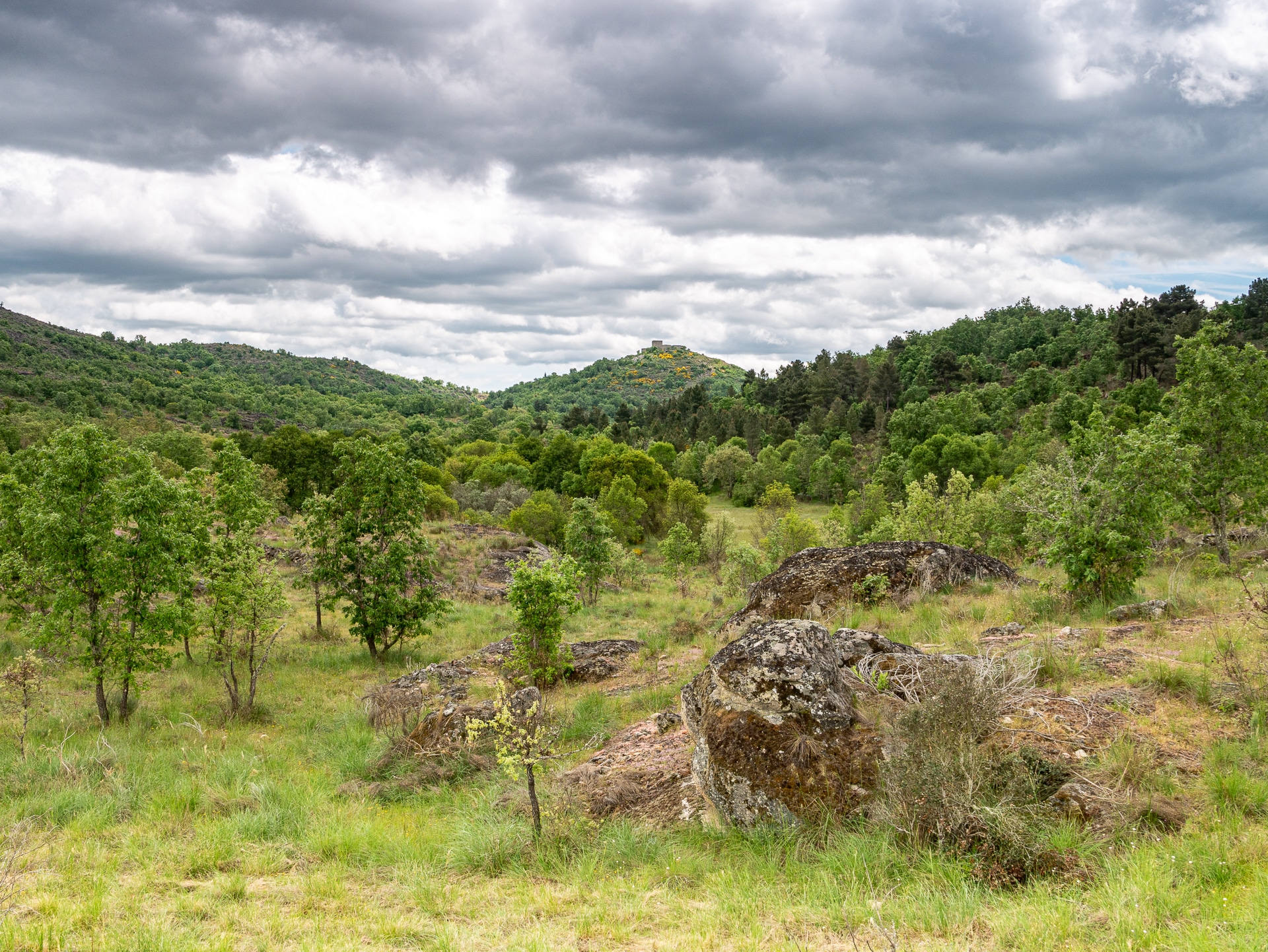
Rewilding Portugal and The Lifescape Project are pleased to announce the completion and publication of an important report, Legal Mechanisms for Conservation and Restoration in Europe: Examples and Lessons for Portugal. Commissioned by Rewilding Portugal and authored by Lifescape, the report addresses one of the most persistent obstacles to nature restoration in Portugal: the lack of a legal instrument dedicated to conservation and its related objectives, capable of securing long-term commitments on privately owned land, regardless of future changes in ownership.
Why does this matter?
Most land of ecological value in Portugal, as in the rest of Europe, is located outside protected areas and is privately owned, being used for agriculture or forestry. Existing Portuguese legal instruments, such as property rights, surface rights, easements, usufruct and leases, may be voluntary, registrable and, in some cases, perpetual, but none of them incorporates a recognised public interest in conservation as a specific purpose. These are generic instruments used for conservation, rather than tools specifically designed for that purpose, which can hinder the pursuit of these objectives in the long term. Private protected areas, on the other hand, possess both public interest legitimacy and a conservation purpose, but only as long as public authorities continue to approve them. This dependence can hinder actions that go beyond conservation, such as active restoration, when these do not align with the authorities’ agenda. A dedicated instrument would complement these tools, including private protected areas, rather than replace them. This is now more important than ever. The first version of Portugal’s National Restoration Plan, required under the European Nature Restoration Regulation, is due in September 2026, and the Court of Justice of the European Union recently imposed financial penalties on Portugal for failures in the implementation of the Habitats Directive, signalling increased pressure to achieve measurable conservation results on the ground.
Interest in these instruments is already growing in practice. As far as we know, the right of superficies has been used for the first time to secure land for rewilding, through a previous joint project between Rewilding Portugal and Lifescape. This report now draws on that experience to raise a broader question: should Portugal go further and create its own mechanism, designed specifically for this purpose?
What the report does
Drawing on Lifescape’s legal expertise, its strong capacity for comparative legal analysis, and the practical experience gained as a designated ‘responsible body’ (under both the English regime of conservation covenants and the Scottish regime of conservation burdens), the report combines three areas of analysis:
- An in-depth analysis of the Portuguese legal framework, including the constitutional basis for environmental protection set out in Article 66, national environmental and climate law, and EU and international obligations.
- A comparative study of five European conservation mechanisms: English conservation covenants, Scottish conservation burdens, French obligations réelles environnementales, Dutch kwalitatieve verbintenissen, and Catalan land stewardship contracts; each assessed on the basis of a common set of fourteen legal and practical criteria.
- The translation of these findings into a model for Portugal, with recommendations and suggestions for future work.
The main recommendation
The report’s main conclusion is that Portugal should establish its own legal mechanism for land management specifically for conservation purposes, which would be registrable. This would require a separate, stand-alone piece of legislation, rather than stretching the legal limits of the categories already set out in the Civil Code. If properly designed, such a mechanism would allow landowners and conservation organisations to enter into voluntary, long-term agreements – with indefinite duration being the norm – which would survive changes in ownership, without needing to be linked to a neighbouring ‘dominant’ property. It would coexist with existing public law protections, without replacing them, and would be designed to interface clearly with the land registry, spatial planning, forestry, hunting and future conservation incentive schemes. The adoption of such an instrument would also place Portugal at the forefront of private land conservation in Europe, ahead of most continental jurisdictions, which still lack a dedicated instrument of this nature.
The report also sets out detailed and specific recommendations for different target audiences: policy-makers and legislators, public authorities and land registry bodies, and rewilding and conservation organisations. It also includes practical guidance on the order of implementation: first establish the legal framework, treating tax incentives and support schemes as a subsequent step rather than a precondition.
Future prospects
Rewilding Portugal and The Lifescape Project will use this report to inform their ongoing advocacy work in favour of relevant legal and policy reforms in Portugal, including joint efforts with policy-makers in the context of the National Restoration Plan. The two organisations view the report as a practical foundation, based on comparative legal experience and direct land management, to address a long-standing gap in Portugal’s conservation toolkit. This mechanism will provide landowners and conservation organisations with the legal certainty they need to commit land to restoration for generations to come.
View the report
An extended summary of the report is available here. The full report is available on request. Policy-makers, public authorities, landowners, conservation and rewilding organisations, researchers and journalists wishing to access the full text may contact Stephanie Smith (Managing Lawyer – Rewilding Law) at stephanie.smith@lifescapeproject.org and Catarina Prata (Senior Rewilding Lawyer) at catarina.prata@lifescapeproject.org.