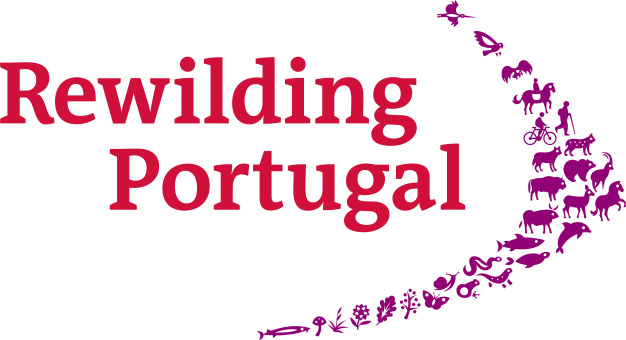

There are species that inhabit the landscape. And there are species that shape it. The European beaver (Castor fiber) belongs to the second group — it is what ecology refers to as an ‘ecosystem engineer’, an animal that does not merely live in its environment, but transforms it in a profound and lasting way. Its dams, built from branches, logs and mud, transform linear watercourses into mosaics of wetlands. And it is from this simple act that a cascade of ecological effects is set in motion, remarkable for its scope.
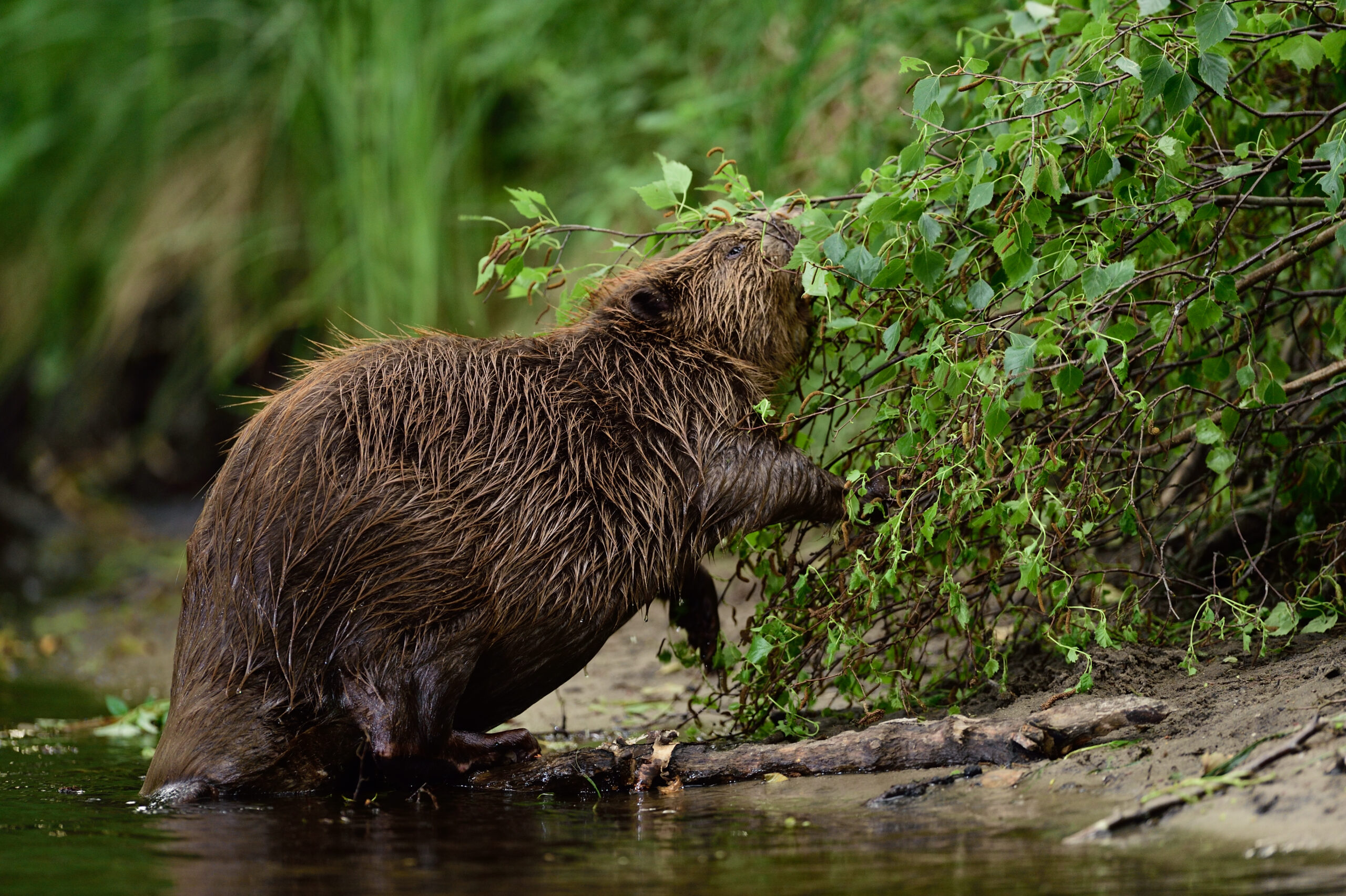
There are species that inhabit the landscape. And there are species that shape it. The European beaver (Castor fiber) belongs to the second group — it is what ecology refers to as an ‘ecosystem engineer’, an animal that does not merely live in its environment, but transforms it in a profound and lasting way. Its dams, built from branches, logs and mud, transform linear watercourses into mosaics of wetlands. And it is from this simple act that a cascade of ecological effects is set in motion, remarkable for its scope.
Water first
Let’s start with water. Beavers’ dams hold water back during dry spells, acting as natural reservoirs that release it gradually over the driest months. Downstream, the river’s flow becomes more regular: less extreme during floods, more sustained during droughts. In a country like Portugal, where water management will be one of the main concerns in the coming decades, this service is of incalculable value.
The wetlands created by beavers also act as natural filters. Sediments settle, nutrients are absorbed by aquatic vegetation, and the water flowing downstream is cleaner than the water that entered. In catchment areas under pressure from agriculture, this filtration has a direct impact on water quality.
Biodiversity hotspots
From a biodiversity perspective, beaver wetlands are veritable hotspots. Across Europe, studies show that areas with beavers have significantly higher biodiversity indices than equivalent areas without them: more amphibians, more waterbirds, more fish, more aquatic invertebrates, and a greater diversity of riparian plants.
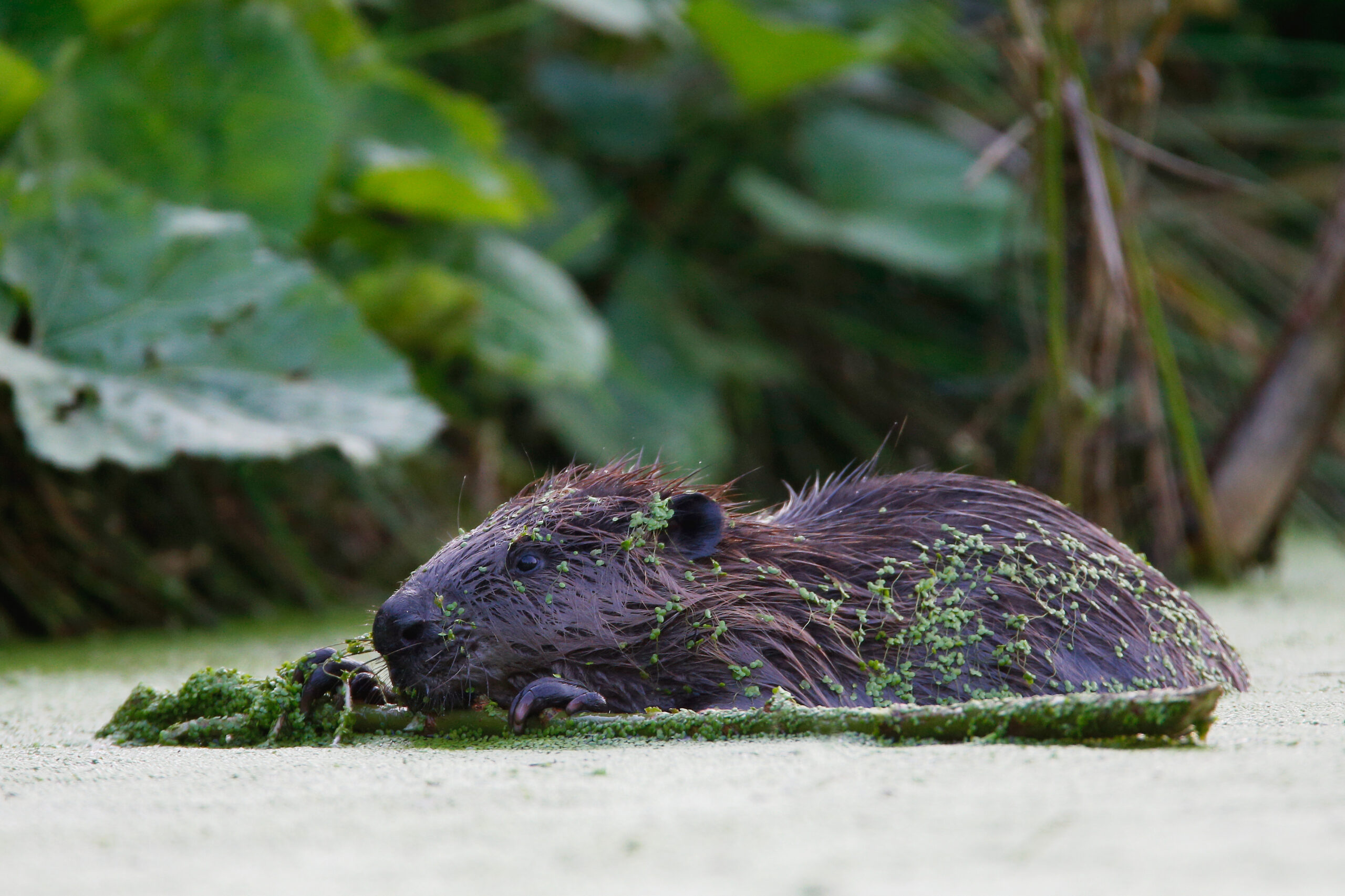
The beaver is also a ‘disturber’ of the riparian forest — and we use ‘disturber’ in a positive sense. By felling trees and shrubs for its dams and as food, it creates clearings that rejuvenate the forest, promote structural diversity and create habitat for species dependent on early stages of succession.
An absence of five centuries
In Portugal, the beaver is thought to have disappeared between the Roman period and the Middle Ages, a victim of overhunting and the destruction of wetlands, at a time when pressure on wildlife was unchecked. Evidence of their historical presence remains in the fossil record — such as at Gruta do Caldeirão, near Tomar — and in place names, with locations whose names appear to derive from archaic terms for the animal. For around five hundred years, Portugal’s rivers were without their engineer.
The scottish example: River Tay
The reintroduction of the beaver in Scotland is one of the best-documented cases in Europe, and is of particular relevance to us: like Portugal, Scotland went centuries without beavers and had to rebuild its knowledge of the species’ behaviour and impacts in a modern context.
In 2009, following a lengthy process of public consultation and scientific assessment, an official reintroduction programme was launched in Knapdale, Argyll. At the same time, beavers of Bavarian origin had already been released without authorisation into the River Tay, giving rise to a second, rapidly expanding population.
What followed surprised even the most optimistic ecologists. On the River Tay, beavers spontaneously colonised dozens of kilometres of the river system — between 2017 and 2018, the population was estimated at between 300 and 550 individuals. Their dams created new wetlands, trout and salmon populations recovered in several stretches, and downstream flooding became less severe.
There were also disputes with farmers whose fields were flooded, and with forest owners who lost trees. The response was a management system that included financial compensation, measures to control water levels in dams, and the relocation of problematic animals. In 2019, the beaver was declared a protected species in Scotland, becoming the first extinct mammal to be officially reintroduced and protected in the UK. Today, it continues to expand into new catchment areas, with active translocations taking place in the Cairngorms.
It makes ecological sense — and it makes economic sense
The Tagus and Douro river basins are the natural candidates for an initial reintroduction in Portugal. Both have tributaries with suitable riparian habitat: well-developed riparian vegetation, an appropriate current speed and sufficient food. The choice of sites would require a detailed technical assessment, but the potential is clearly there.
Alongside the ecological arguments are economic and climatic ones. Portugal faces a growing problem of drought and water management, and the projections for the coming decades are worrying. Here is a species that literally builds water reservoirs, filters rivers, regulates flow and reduces the intensity of floods — and does all this for free, without maintenance, 24 hours a day.
In February 2025, an incident in Central Europe perfectly illustrated this point. In the Brdy region of the Czech Republic, a family of beavers spontaneously built a series of dams exactly where an artificial structure had been planned to protect the River Klabava. The human project had been at a standstill for seven years, held up by bureaucratic hurdles and land ownership issues. The beavers sorted it out in just a few nights. The estimated savings for the authorities amounted to around 1.2 million dollars (30 million Czech koruna), and the resulting area was twice the size originally planned. This is no anecdote. It is a public policy argument — the most recent and concrete demonstration that reintroducing the beaver is not sentimental environmentalism, but intelligent management of natural resources.
Nature returns with or without our permission
It is worth mentioning another recent phenomenon: unauthorised beaver releases. In recent decades, Europe has witnessed a silent wave of informal reintroductions — in England, Germany, Belgium, the Netherlands and Spain — carried out by individuals and groups who have pre-empted official procedures. This tells us something important: there is an active social demand for more wildlife in Europe’s landscapes, a demand that institutional channels, with their cycles of consultation, impact assessments and four-year political horizons, have systematically failed to meet.
We are living in a unique moment. For the first time in centuries, Europe has populations of beavers, wolves, bears, vultures and otters expanding into territories they have not set foot in for generations. Nature is returning, with or without our permission. The only question we need to answer is whether we want to participate in this process in an intelligent, proactive and fair manner.
And in Portugal?
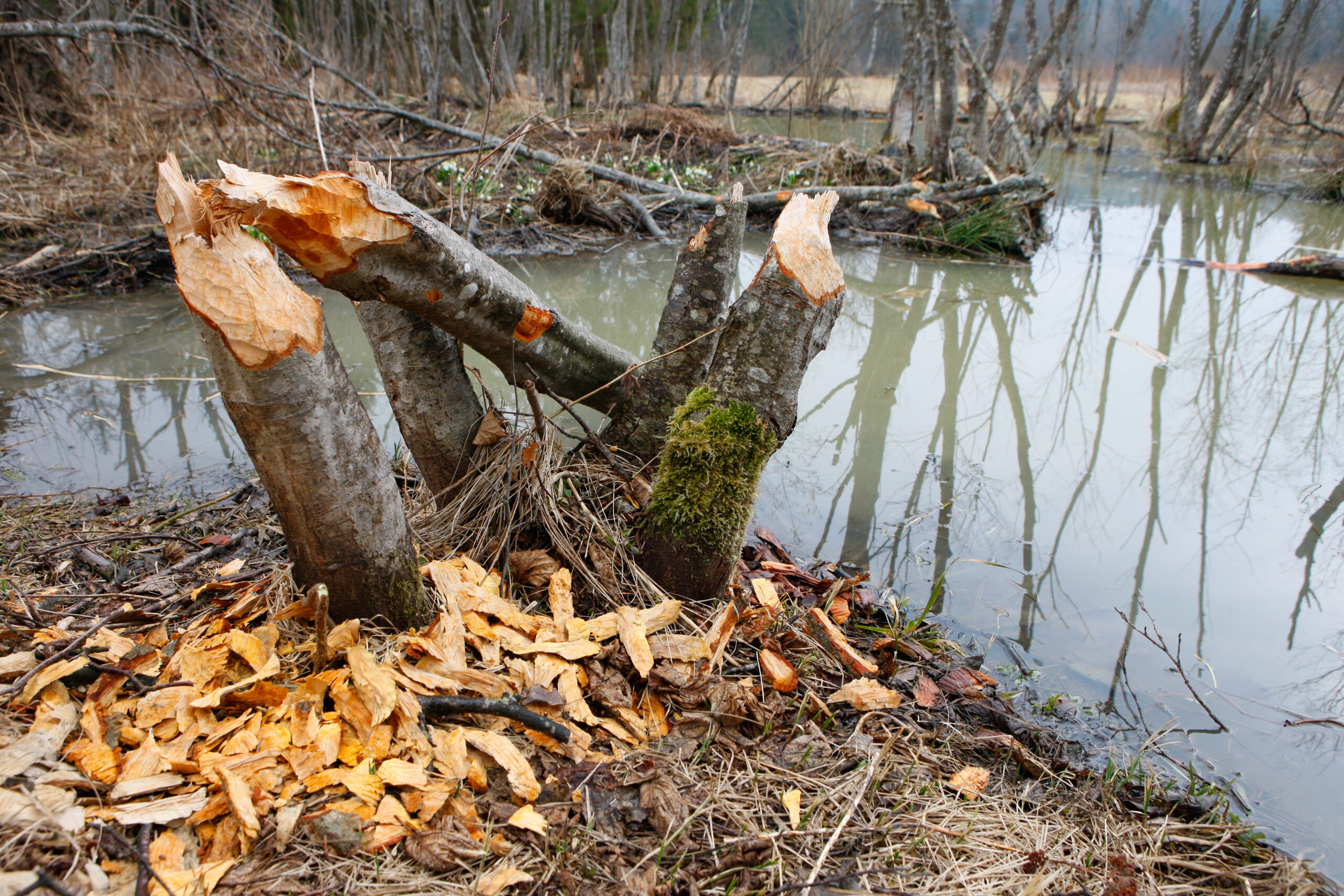
In May 2025, our monitoring team confirmed, through video and photographs, the presence of a young adult European beaver on Portuguese territory, in the Douro International Natural Park, near the mouth of the River Tormes. First came the characteristic gnaw marks on the tree trunks; then, the images captured by camera traps. After an absence of around 500 years, the beaver arrived through natural dispersal from Spanish populations that have been expanding over the last two decades — a process that began in 2003 with the unofficial release of 18 individuals into the River Aragón, a tributary of the Ebro, and which gradually reached the Douro and Tagus river basins. As early as 2023, there were records of beavers just a few kilometres from the Portuguese border, in the Arribes del Duero. At the time, we said it was only a matter of time. And here we are.
Now we need to create the conditions for them to stay. A single dispersing individual does not constitute a population. For the beaver to establish itself and reproduce sustainably, breeding groups are needed, along with suitable riparian habitats throughout the Douro and Tagus river basins, and local communities and farmers prepared for their presence — equipped with information, conflict management mechanisms and the assurance of technical support when problems arise.
This is where a formal reintroduction programme makes all the difference. It does not replace natural expansion — it builds on it. It takes the momentum that nature has already set in motion and accelerates it, consolidates it, and spreads it across multiple river basins, rather than waiting for the beaver to travel hundreds of kilometres along degraded rivers on its own. The difference between having beavers in the Douro Internacional by 2025 and having them in the Tagus, the Mondego and the Guadiana by 2035 may lie precisely there: in the decision to act now.