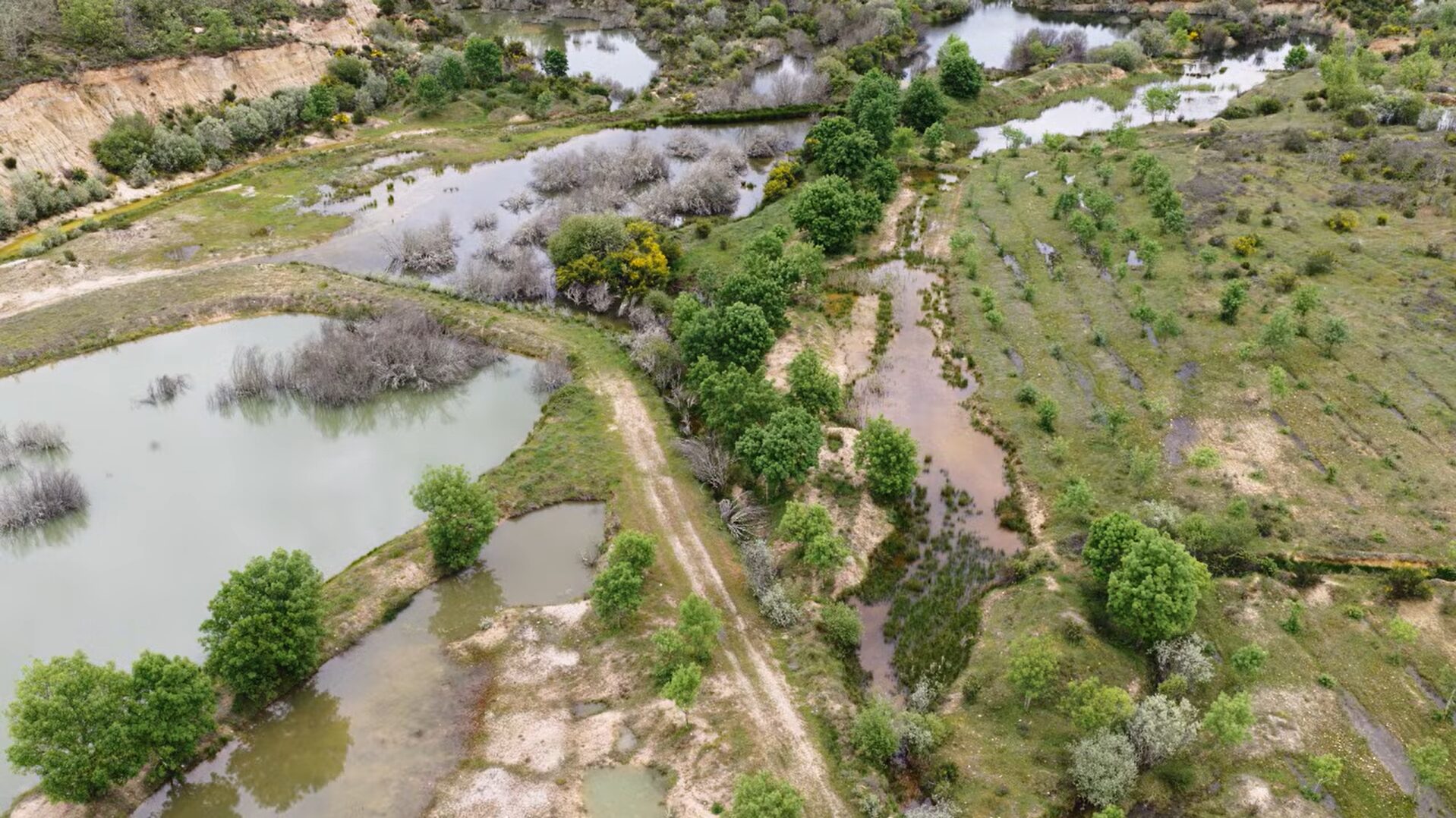

Four years of rewilding are transforming Paul de Toirões into an oasis of biodiversity in the Greater Côa Valley. A former mine that once drained life from the landscape is now giving it back twofold, retaining ever more water and supporting an ever-increasing number of species.
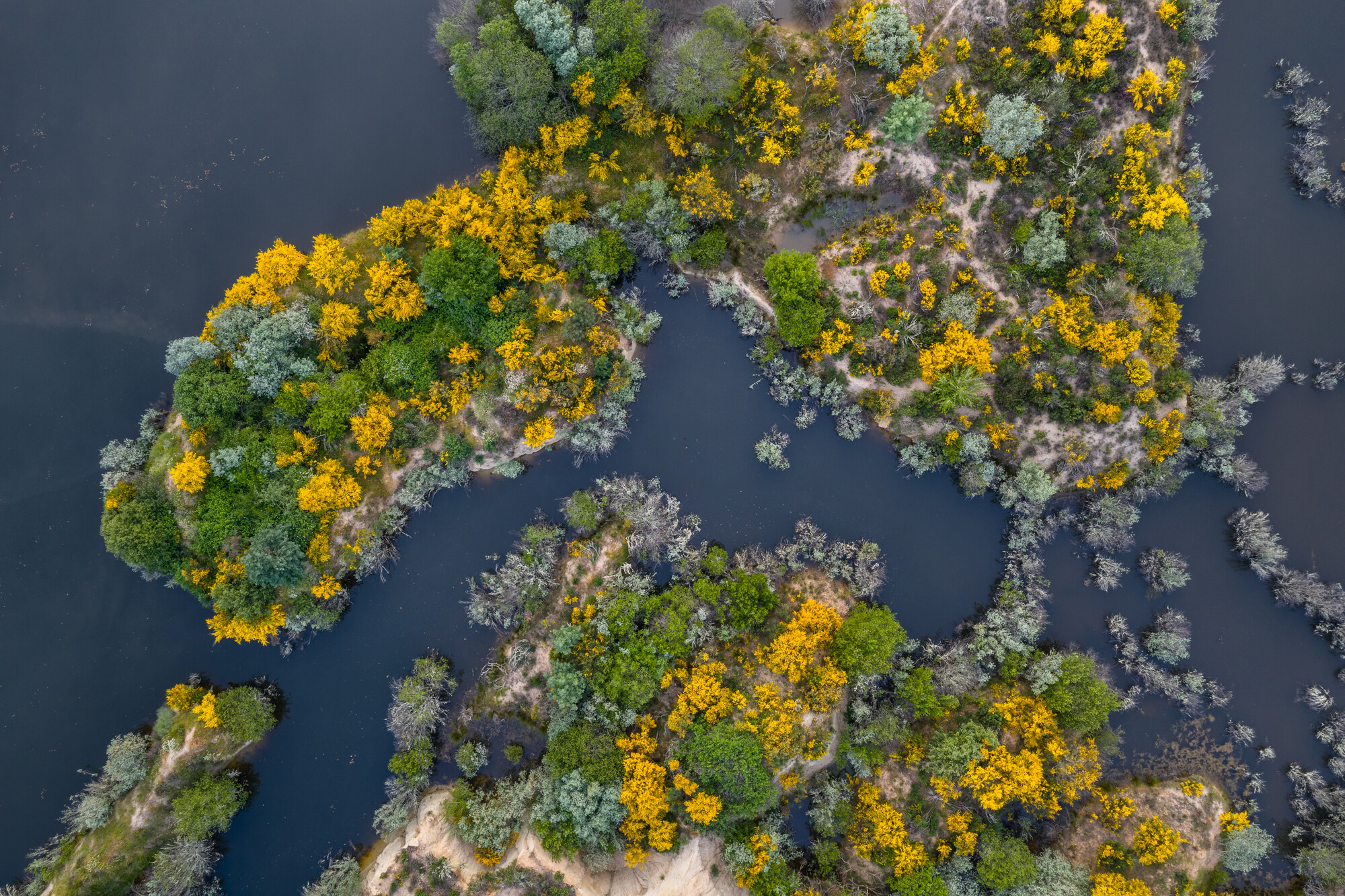
There are landscapes that tell stories of destruction, so often left unresolved or in need of restoration. And there are landscapes that tell stories of recovery. In the Paul de Toirões rewilding area, a former mining site located in the Greater Côa Valley, the two now coexist side by side. And the scars of the past are healing in the present and securing the future.
The marks of mining remain visible in the uneven topography of the land, in the artificially excavated channels and in the ponds created by mining activity. But amongst these exposed scars, a different story began to unfold four years ago. A story written by water, by plants, by amphibians, by birds and by all the natural processes that are slowly reclaiming the space that was taken from them. Four years after the launch of the ecological restoration project carried out by Rewilding Portugal in this area, with the support of Mossy Earth, the results are becoming increasingly visible.
But perhaps the most important word is another: measurable. Because what has happened at Paul de Toirões is not merely a visual transformation. It is a functional transformation, which must be measured, quantified, monitored and replicated across the entire territory.
An abandoned mine gaining a new life
When mining operations ceased, well over a decade ago, nature immediately began to reclaim the land, slowly and gradually. The abandoned excavations filled with water. Wild vegetation began to sprout. Some birds found refuge in the ponds inadvertently created by human activity. But despite this potential, the landscape remained bound by an artificial legacy…
Much of the water that reached the site during the rainy seasons continued to drain away rapidly through channels and chokepoints created over decades of mining activity. The water passed through, but did not linger. And without that lingering, it is impossible to have a functional wetland capable of generating the burst of life that typically characterises these ecosystems. What’s more, we are talking about excavations with steep banks that were neither prepared nor designed for wildlife and which often kept it at bay, despite being so close. And that water serves no purpose in the landscape if it is not accessible to those who need it to ensure the functionality of an ecosystem. And this is precisely where rewilding came in.
The first interventions
In 2022, Rewilding Portugal and Mossy Earth launched a series of interventions designed to restore the area’s hydrological processes. Unlike conventional ecological engineering projects, the aim was not to design an ecosystem. It was to allow the existing ecosystem to emerge in all its functionality and capacity.
To this end, several points were identified where water was rapidly leaving the landscape via old drainage channels and narrow passages created during mining operations. At these locations, strategic natural barriers were constructed using materials available on site and reinforced with native vegetation, including willows, which have spread across the landscape through natural dispersal. Some artificial passages were removed or blocked. Old drainage pipes no longer accelerate the flow of water.
We are talking about small-scale interventions that are visible, but which take time and have extraordinary consequences for the health of an aquatic landscape. By reducing the flow velocity, the water began to spread more evenly across the landscape, flooding areas that had previously remained dry for much of the year and thus creating new aquatic and semi-aquatic habitats. The result was not just more water. It was more time for the water to be present, and the water remaining for longer, in more places than it previously occupied. And that difference changes – and has changed – everything.
Almost the double of water surface
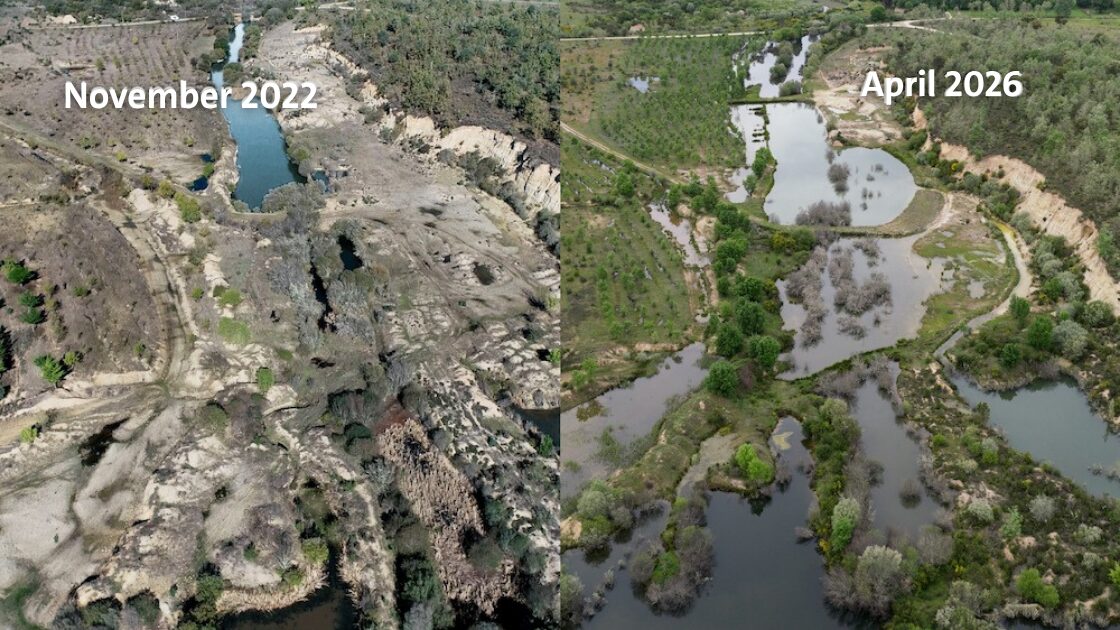
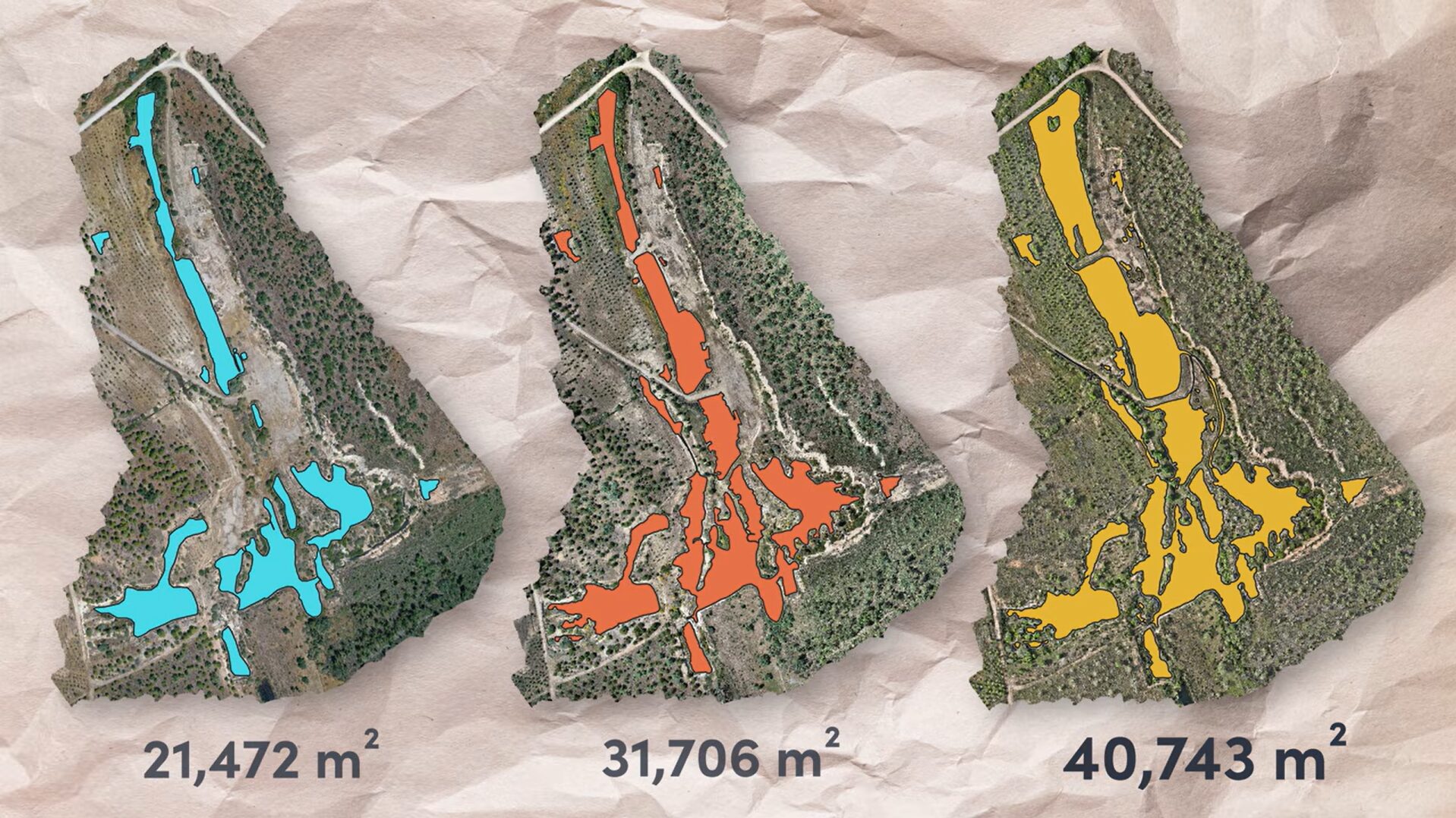
The changes observed through high-resolution aerial mapping clearly reveal the scale of the transformation, and the analysis has now been carried out again, almost four years later.
In 2020, prior to the interventions, the area analysed comprised 21,472 square metres of water surface. By the spring of 2023, just a few months after the completion of the machinery-based works and more direct interventions, this figure had already risen to 31,706 square metres – a significant increase of 47.2 per cent. But the most impressive result ultimately emerged in the following years.
As vegetation became established, the soil began to regain its water-retention capacity and the new wetland systems stabilised, the water surface area continued to increase. By April 2026, it had already reached 40,743 square metres. We are talking about an increase of 87.3 per cent compared with the situation prior to the interventions, in just three and a half years!
In a Mediterranean region characterised by recurrent droughts and increasing water scarcity, this is a particularly significant finding, and one that cannot be explained solely by wetter years, as these have also been followed by drier summers, and vice versa. And this difference is not simply because there is more water in the landscape, but rather because the landscape is genuinely capable of storing it.
First came water. Then came life.
The planet’s development follows this rule, and the images collected over the past four years confirm it and reveal a fascinating ecological sequence.
In the areas where intervention took place, water was the first element to return. And to stay. Vegetation followed. Cattails, willows and many other plants characteristic of wetlands gradually began to colonise and occupy the banks of the ponds and flooded areas, increasing in both number and density. What were initially open, exposed stretches of water with bare banks gradually transformed into a complex mosaic of habitats.
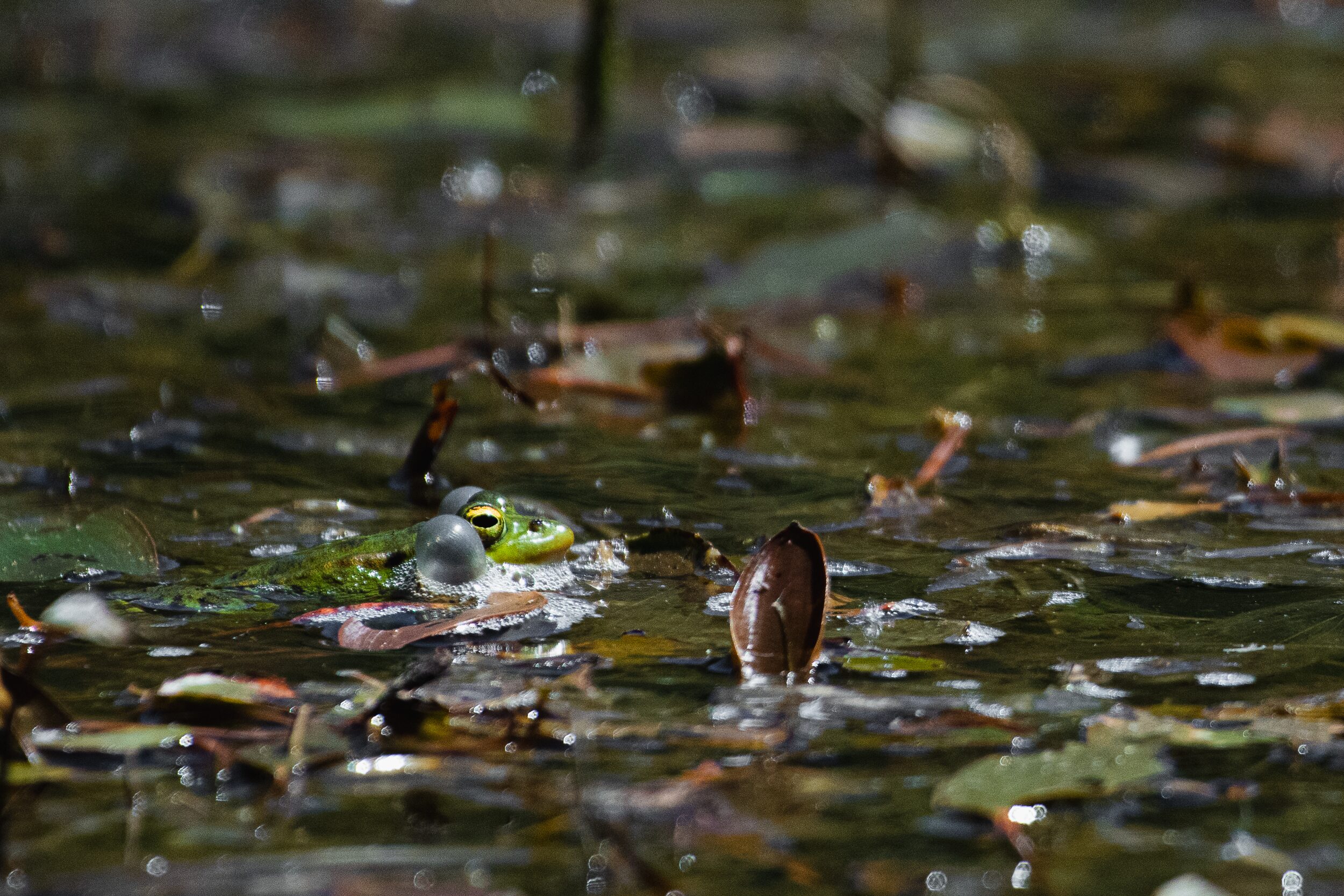
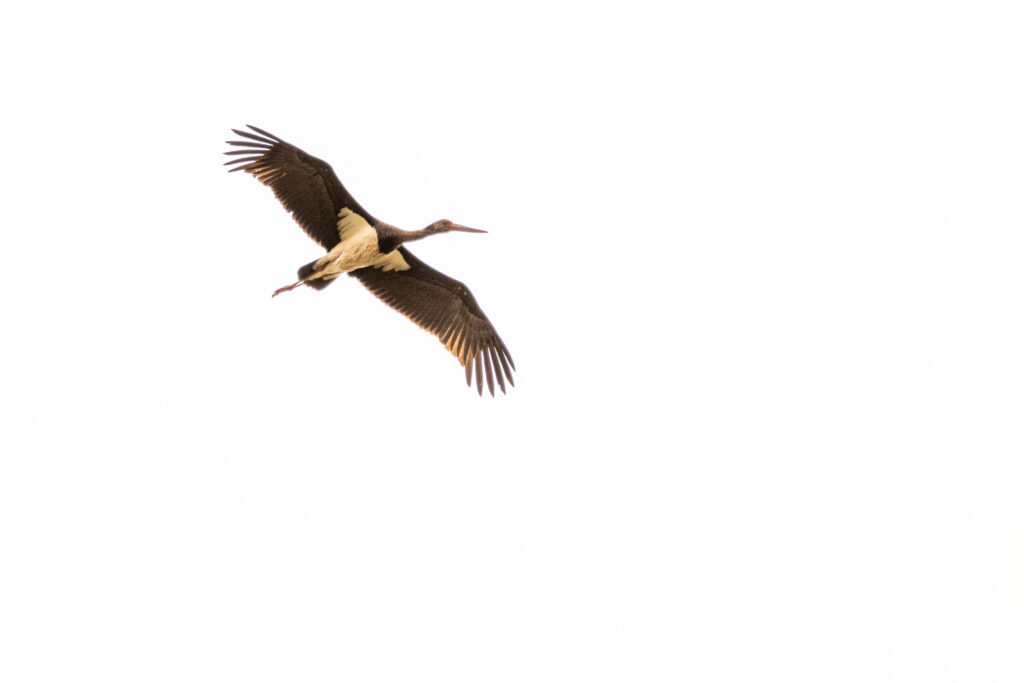
And where diverse habitats emerge, biodiversity flourishes. Among the aquatic vegetation, green frogs, moor frogs and Iberian frogs now breed. The ponds provide a refuge for the striated tortoise, a species classified as Near Threatened due to the widespread loss of wetlands across Europe. Dragonflies, water beetles and countless other invertebrates occupy ecological niches that simply did not exist before. Waders and ducks feed on the flooded banks. Otters and grey herons prey on the invasive red crayfish, keeping their numbers in check and using them as an important food source and part of their diet. Black kites, short-toed eagles and many other birds regularly circle the skies and have even begun to nest in the area. The shy black stork is now making itself known and appears here regularly.
Each species represents another piece of an ecological system that continues to grow in complexity as time goes by.
The little ponds that change everything
One of the most interesting consequences of the interventions was the emergence of temporary Mediterranean pools. Although unspectacular at first glance, these habitats are among the rarest and most ecologically valuable in the Mediterranean landscape, as during winter and spring they collect water from rainfall and flooding from adjacent lagoons, but with the arrival of summer they gradually become isolated and eventually dry up.
But it is precisely this alternation that makes them so important. With no permanent fish or other aquatic predators – precisely because they dry up at certain times of the year – these small refuges therefore offer ideal conditions for the reproduction of amphibians and numerous specialised invertebrates, which need these predator-free wetlands to breed safely. By creating the conditions for these habitats to form, this project has not only increased the amount of water present in the landscape, but has also succeeded in enhancing its ecological diversity.
The future starts now
Despite the results achieved, Paul de Toirões is still only at the beginning of its recovery. Ecological succession is far from complete, and rewilding needs even more time to produce increasingly visible and significant results. We therefore celebrate these small victories and positive impacts, whilst recognising that there is much more to be done and monitored in the coming years.
Vegetation will continue to transform existing habitats, new species will continue to colonise the area, and the next steps involve restoring even more natural processes to the landscape. For this very reason, the presence of large herbivores, for example, is essential, and there are plans to bring them back to this landscape, just as we have done in other rewilding areas across the country.
It is also important to boost the populations of wild rabbits and other small prey species, which can encourage increased use of the area by predators such as the wolf or, in the future, the Iberian lynx. These are all pieces still missing from a landscape that is intended to be truly functional, and which could add yet more layers of complexity to this rapidly recovering ecosystem.
Because the aim was never simply to create a series of ponds. The aim has always been to create the conditions for nature to once again shape its own future in a functional and comprehensive way. Four years on, the water continues to show the way. And life continues to follow it, just as it always has.
And you can come and visit to see these results with your own eyes! Contact us at info@rewilding-portugal.com and book your visit with us.