
Rewilding Portugal carried out the first reintroduction of the wild rabbit (Oryctolagus cuniculus algirus) in one of its rewilding areas, marking another step forward in the recovery of ecosystems and prey populations in the Greater Côa Valley. The initiative took place in the Ermo das Águias rewilding area, as part of the LIFE LUPI LYNX project, which aims to create the ecological conditions necessary for the expansion of the Iberian wolf and the Iberian lynx in Portugal.
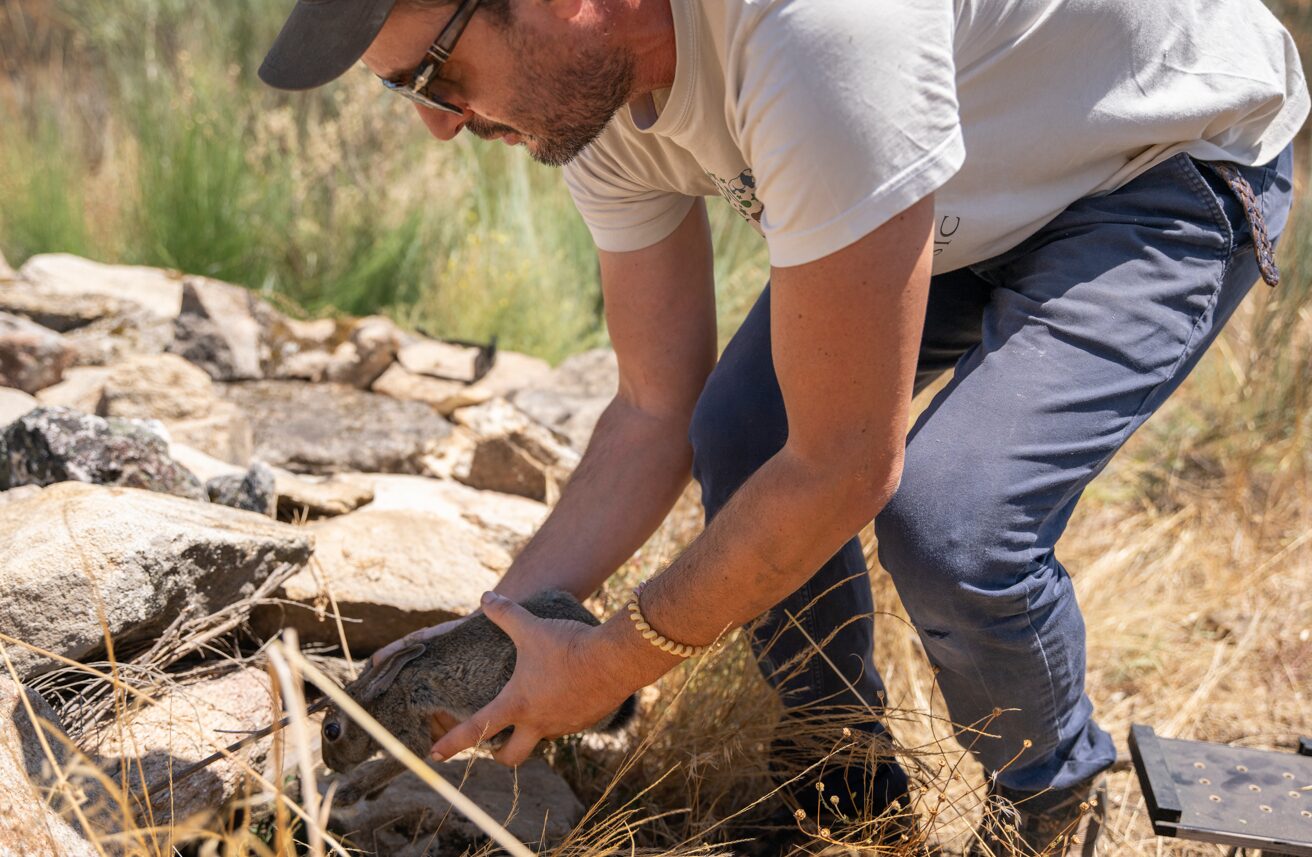
In total, 17 wild rabbits were reintroduced, distributed across three artificial enclosures built specifically for this purpose. Each enclosure was home to a small breeding group, comprising four to five females and one male, creating high-density nuclei that enable the populations to establish themselves under the best possible conditions. These artificial enclosures are protected by electric fencing, which prevents access by predators and provides food, water and shelter. The aim is to allow the animals to adapt to the territory and breed safely during the initial phase before being released. As the population grows, the rabbits gradually begin to leave the enclosures and naturally colonise the surrounding rewilding area, eventually surviving independently.
This approach represents a strategy based on best practice in the Iberian Peninsula to accelerate the recovery of a key species in Mediterranean ecosystems. The wild rabbit is the main prey of the Iberian lynx and the Iberian imperial eagle, and is also an important food source for more than 20 other Iberian predators, including the Iberian wolf; therefore, boosting its populations is essential to restore food webs and promote the return of large predators.
The Ermo das Águias area was selected after it was confirmed that there were no wild rabbit populations in the area, both by the team of biologists based on field monitoring and through reports from former hunters, enabling the creation of a population nucleus where the species had recently been absent. This area has benefited from various rewilding initiatives over recent years, including natural grazing by Sorraia and Tauros horses, contributing to the recovery of habitats and creating increasingly favourable conditions for biodiversity.
A task that begins long before liberation
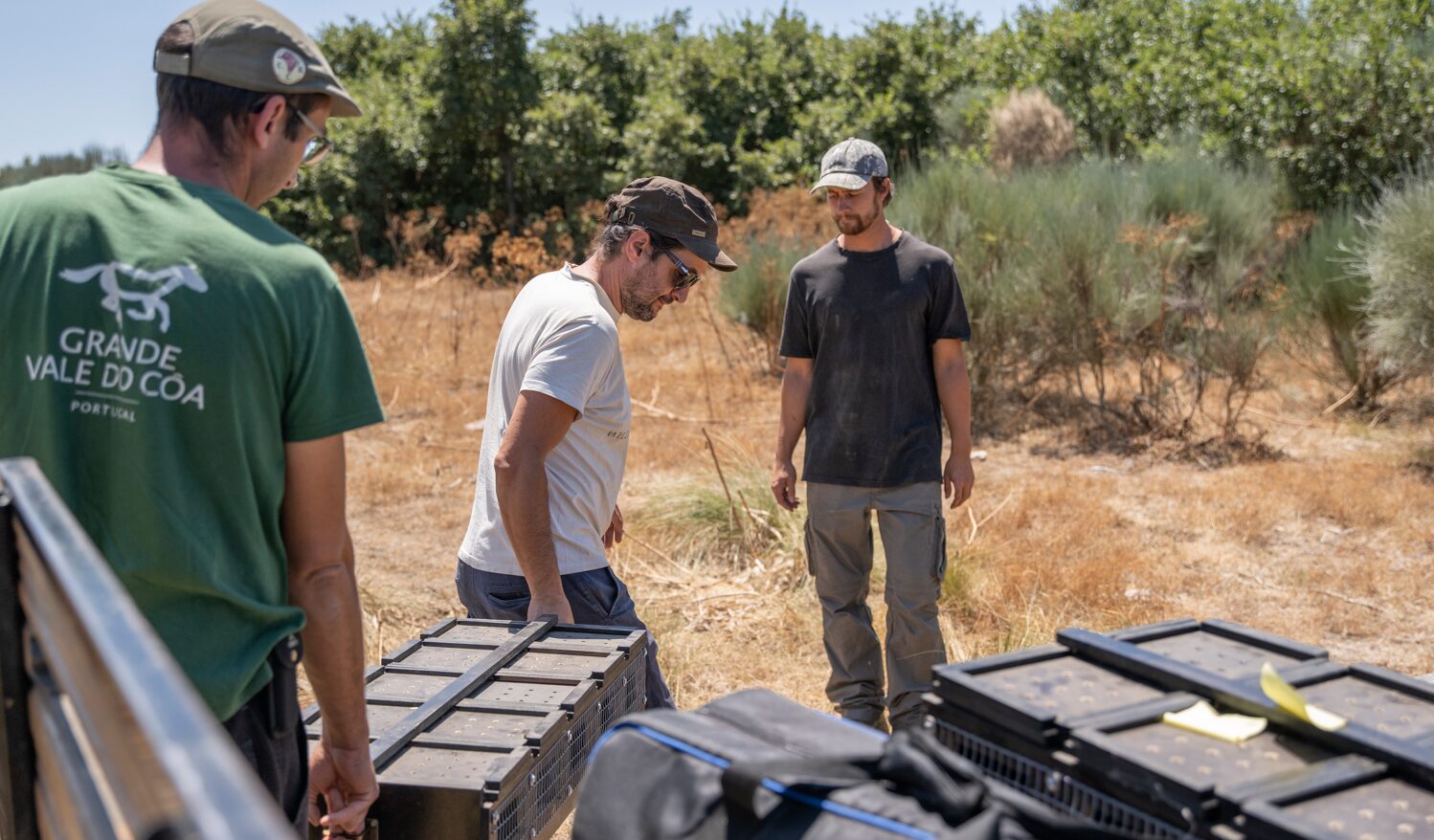
The release of these animals is the result of a wider initiative carried out by Rewilding Portugal as part of the LIFE LUPI LYNX project, which included the acquisition of a breeding enclosure – a facility dedicated to rearing wild rabbits for future population reinforcement programmes. This enclosure, located outside the rewilding areas, enables the production of animals for ecological restoration projects and is a key component of the species’ recovery strategy.
At the same time, the organisation is seeking to expand this capacity by establishing new breeding enclosures in partnership with local authorities, hunting associations and other landowners, thereby increasing the production of animals for future interventions. This diversification facilitates an increase in the genetic diversity of the rabbits used, by drawing on various sources of animals, thereby ensuring greater genetic robustness of the populations.
Rewilding Portugal also supports other organisations in carrying out similar initiatives on their land, contributing to the recovery of the wild rabbit at the landscape scale and bolstering the availability of this species in priority areas for the wolf and the lynx.
Next steps
Following this initial reintroduction, the team will continue to monitor the development of the populations in Ermo das Águias. A further reinforcement programme is also planned for the Paul de Toirões rewilding area, where new artificial dens are currently being prepared to accommodate future breeding groups.
Although dispersing Iberian lynx have already been recorded in the district of Castelo Branco, there are as yet no established populations in the region. Currently, the nearest breeding populations are in the Alentejo, and the species is slowly expanding its natural range northwards.
The availability of wild rabbits will be one of the key factors in ensuring that this expansion can, in the future, lead to the establishment of permanent populations in the Greater Côa Valley. This is precisely the aim of these measures: to create, today, the necessary conditions so that flagship species such as the Iberian lynx and the Iberian wolf can once again inhabit this territory.
The population reinforcement now carried out contributes directly to the objectives of the LIFE LUPI LYNX project, the successor to LIFE WolFlux, which aims to increase the availability of habitat and prey across more than 16,000 hectares of priority territory for the conservation of these two species.
A species of increasing importance for conservation
The importance of this work takes on even greater significance in the light of the latest scientific advances. Recently, an international team of researchers argued that the Iberian rabbit (Oryctolagus algirus) should be recognised as a distinct species from the European rabbit (Oryctolagus cuniculus), reinforcing the uniqueness of this important component of the Iberian Peninsula’s biodiversity.
Although this scientific proposal is still awaiting validation by international taxonomic authorities, the researchers believe that recognising this distinction will better reflect the conservation status of the Iberian rabbit and guide more appropriate management and conservation strategies.
If officially recognised, this reclassification will lend even greater significance to initiatives such as that carried out by Rewilding Portugal under the LIFE LUPI LYNX programme, which contribute to the recovery of a key species in Mediterranean ecosystems and to creating the necessary conditions for the return of the Iberian lynx and the strengthening of Iberian wolf populations in the Greater Côa Valley.