
There are stories that transform places. Stories made of courage and steps that are taken more with the heart than with the mind, even when everything is planned. Stories of returning to one’s roots and of a deep love for nature and for places that still breathe authenticity. And these places also transform stories, and people. The story of Samuel Ribeiro and Marta Simões is one such story — one that not only changes the course of a life, but also helps to redesign the future of Vale da Senhora da Póvoa in Penamacor and the Greater Côa Valley itself.
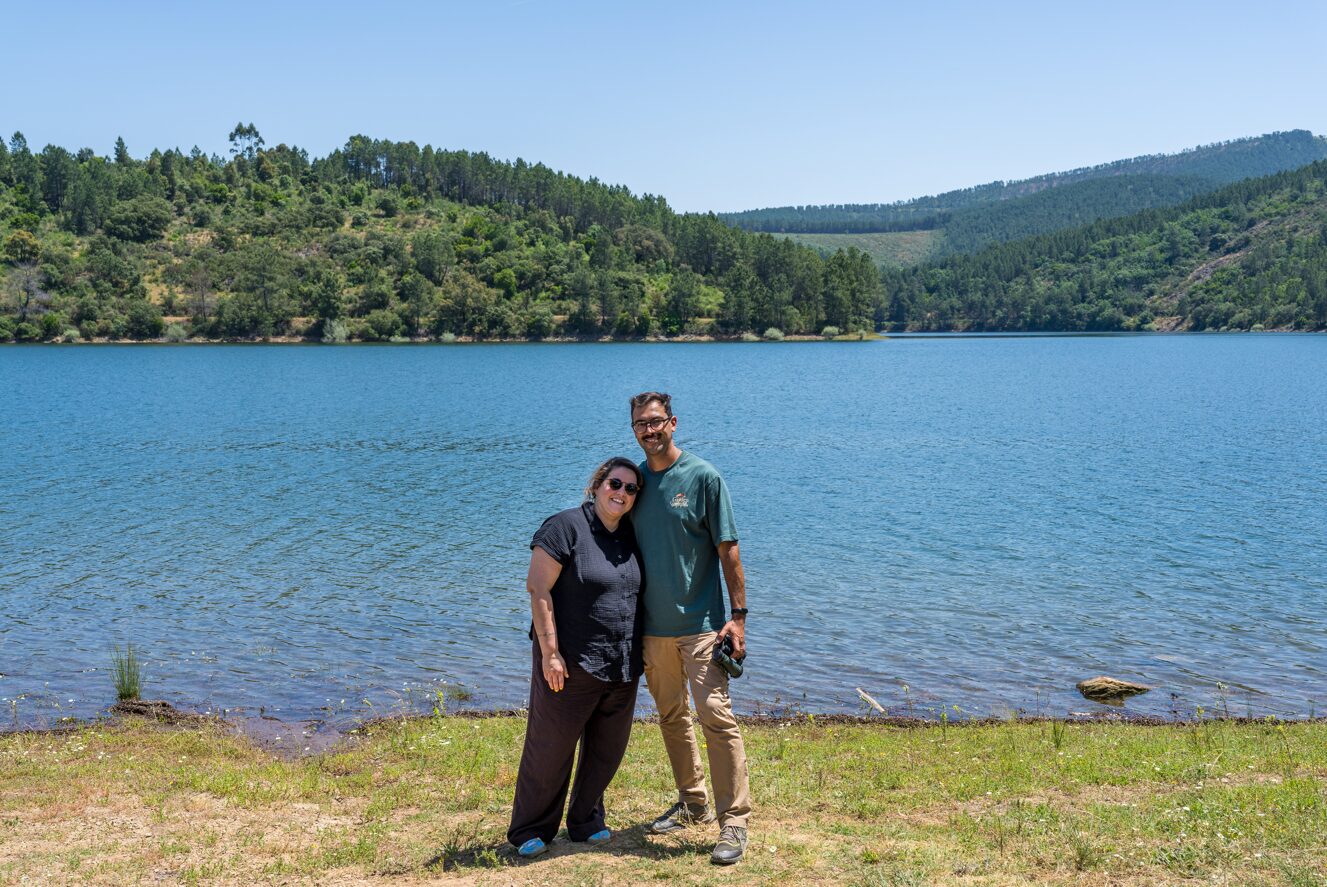
Today, both are members of Rede Côa Selvagem (Wild Côa Network), with their own businesses, bringing energy, entrepreneurship and community connection to a territory whose greatest asset is its natural environment. But the journey to get here has been one of many discoveries, challenges and a growing commitment to the interior and to rewilding.
When the heart finds the territory it belongs to
It all began in 2015, when Samuel visited Vale da Senhora da Póvoa, Marta’s family village, for the first time. What seemed to be just a summer visit turned into an unexpected reunion: without knowing it, Samuel had already set foot in those landscapes as a child, when he visited relatives in nearby Moita.
From then on, the Valley began to call him back. He came for the olives, returned at different times of the year, and even the local wood burn tradition called to him, allowing him to explore the region at his leisure. In 2017, the couple began to imagine a life project there — first accommodation, then other ideas, until they reached the essential certainty: they really wanted to stay, regardless of the business they decided to pursue.
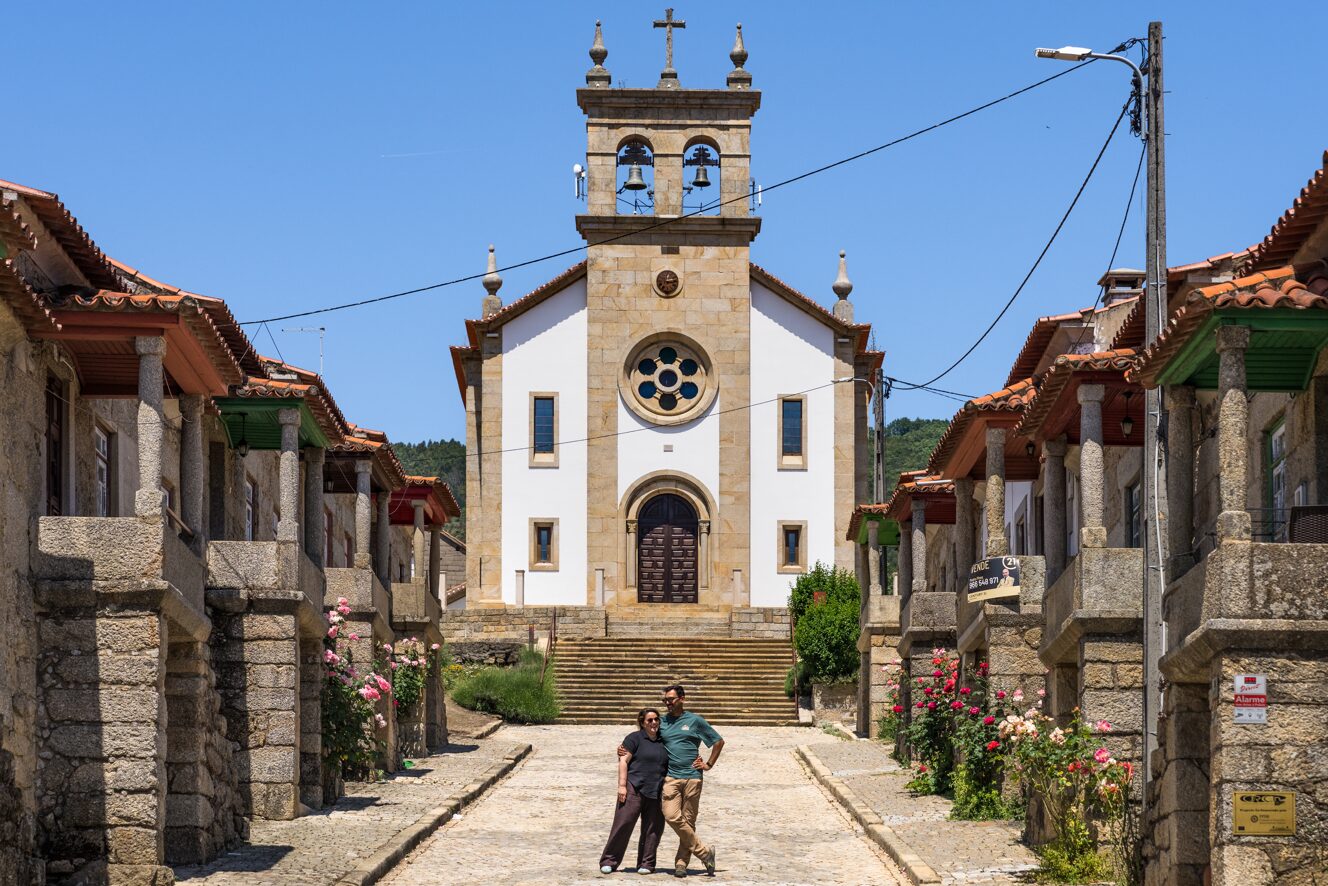
They got married in the village in 2019, at a time when long holidays outside the high season served as a trial run for their permanent move.
The year 2020 brought global uncertainty, but also clarity for Samuel and Marta. With the impact of the pandemic — he without work, she working remotely — they made the decision that had been maturing for years: to move permanently to the countryside.
Marta continued her job, combining remote work with weekly trips to Lisbon. Samuel immersed himself in the local reality: he worked in construction, did occasional jobs and started teaching at a gym in Guarda. It was the necessary step before taking the big leap. In October 2020, Beir’Aja was born, a company that combined Samuel’s training in sports with his passion for tourism, nature, and the stories that the region holds in every valley, every trail, and every horizon. And there are few storytellers in this territory with the eloquence that Samuel manages to put into every story he shares with those he welcomes so warmly.
Growing slowly to grow meaningfully
Between the end of 2020 and the first half of 2021, Samuel devoted himself to building a network, creating partnerships, and studying the territory as if learning a new language—with respect, curiosity, and time. He worked with tourists, but also with residents. One of the most notable partnerships was with CLDS4G Penamacor Inclusivo, which enabled him to take senior physical activity classes to several villages — Meimoa, Aranhas, Aldeia do Bispo, Aldeia de João Pires, Vale da Senhora da Póvoa. He was creating a community even before he created a market. This is something he still does today, coordinating it with his tourism work. He has even organised several physical activity classes for seniors in villages where Rewilding Portugal works, offering local communities opportunities like this close to home.
It was at this stage that one of the most transformative connections emerged, one that may have changed the course of events, even without us knowing it at the time: Samuel was selected to participate in Rewilding Portugal’s first Nature Guide course, at the time part of the LIFE WolFlux project, beginning a path of continuous training with Rewilding Portugal and Rewilding Europe.
Since then, he has participated in national and international training courses, specialising in biodiversity, species identification, trekking and, above all, the rewilding approach that he now embodies in an exemplary manner. The growth has been slow, consistent and deeply rooted.
Between challenges and rebirths, 2025 was a year of harvests
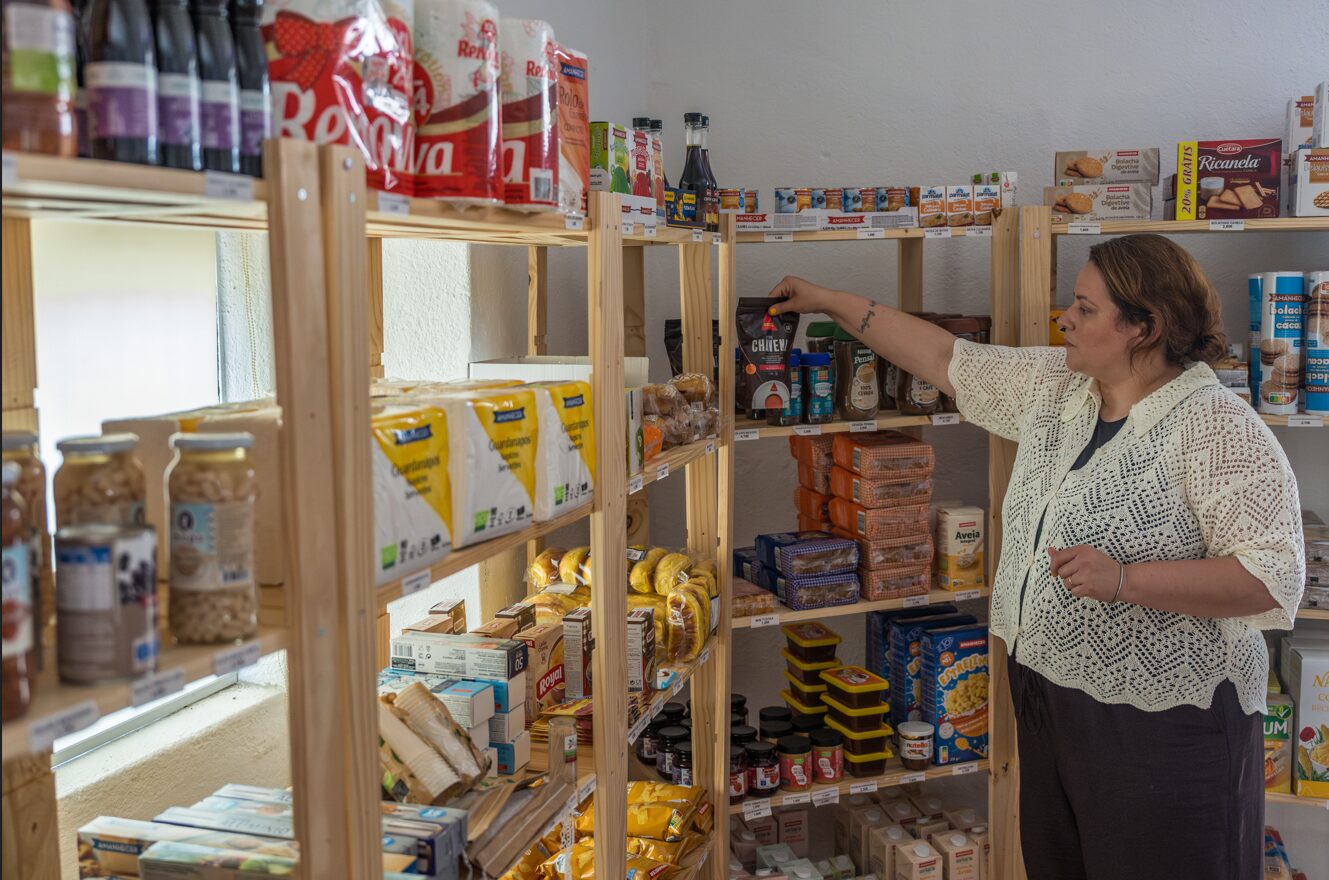
The beginning of 2024 shook his certainties: a sharp decline in business led Samuel to question everything. But the second half of the year brought the fruits of persistence — agencies he had spoken to years before finally began to contact him. And as life moves forward in echoes, September 2024 brought another blossoming: Marta opened Mercearia da Saudade, in the space that belonged to her family, giving Vale da Senhora da Póvoa back a meeting place, an identity and a memory. A local business that is, at the same time, a gesture of love for the territory. Let’s hope Marta knows this as well as we do. And it doesn’t stop there: between breakfasts and catering, Marta is a great connoisseur of local and traditional cuisine and is taking it out into the territory in various partnerships that are gaining increasing prominence and scale.
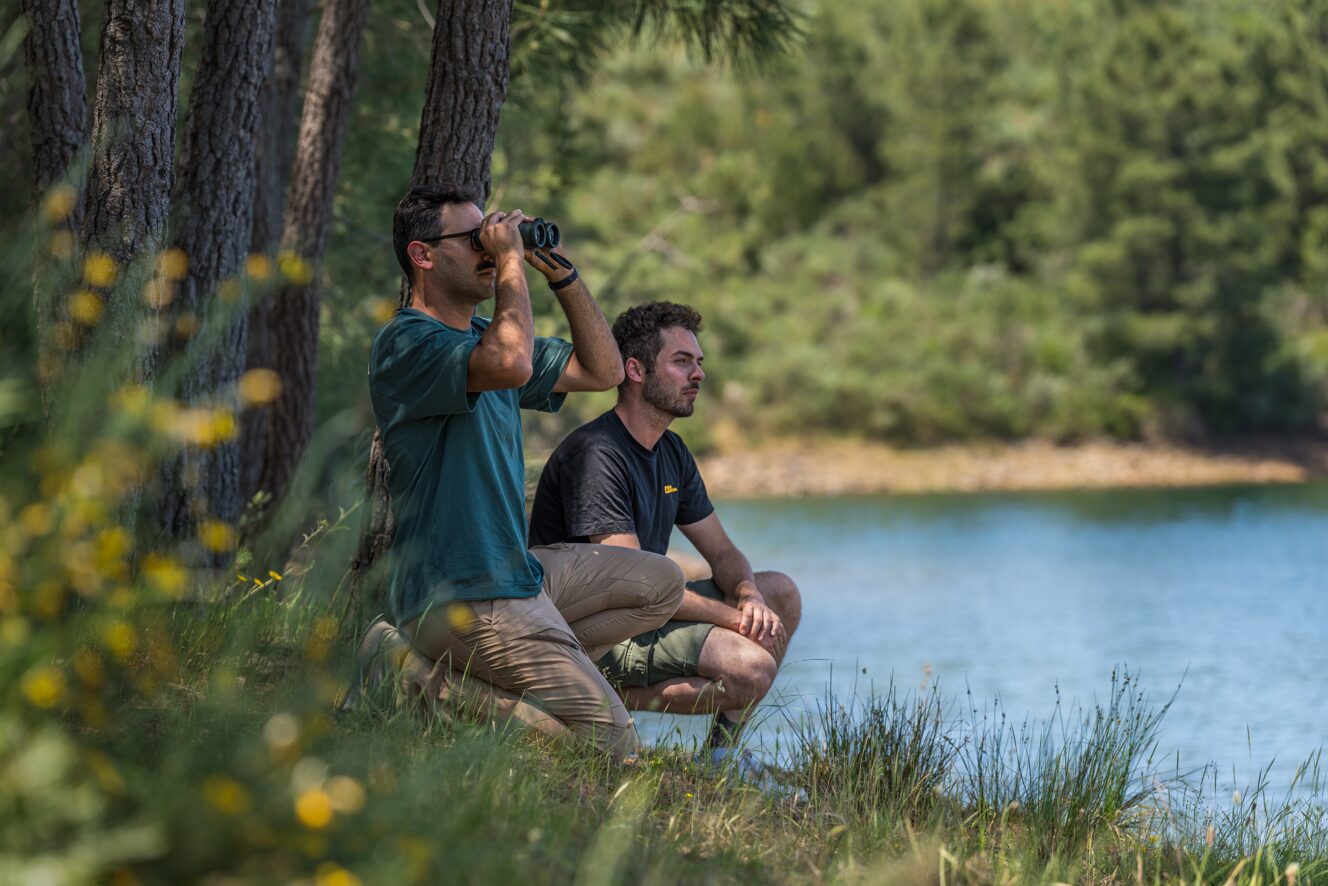
After years of quiet effort, 2025 proved to be an exceptional year. Beir’Aja consolidated its position, partnerships multiplied, and Samuel established himself as one of three guides qualified to accompany visitors to the rewilding areas of Rewilding Portugal — one of the faces that welcome those who come to discover the Greater Côa Valley. Self-taught, committed and deeply aligned with rewilding values, Samuel describes his recent journey as follows: ‘I have more and more skills as a guide, more knowledge of flora and fauna, and also more communication tools from Rewilding and the Wild Côa Network.’
And the business is constantly evolving, incorporating increasingly sustainable practices and direct links to the heritage that serves as the backdrop for the visits: it has reduced the time spent in vehicles on 4×4 tours, favouring outdoor activities, and has integrated moments of environmental volunteering into walking tours, such as removing invasive species or stripping acacia bark, etc. And it is no coincidence that he already feels the impact of his work in the territory: ‘The villages in this region are beginning to value their natural heritage more and more. I want to believe that this is partly because they see me “selling” the territory and bringing people to experience it.’
The strength to carry on for those who love their land
Marta and Samuel’s connection to the Valley is expressed in a visceral love, in the traditions they carry with pride and want to pass on to their son, who is now being raised in a rural world, just as they always wanted to provide for him. “This is who I am and I don’t want anything else. The Valley and Penamacor still have a world to explore,” says Marta with conviction that she made the right choice, her eyes fixed on what the future still has to bring them.
And it is precisely this inner world that she and Samuel are helping to explore today — with authenticity and a firm desire to contribute to a living territory. Beir’Aja and Mercearia da Saudade are more than just businesses. They are manifestations of a deep commitment to the countryside, to biodiversity, to the people and to the traditions that make the Greater Côa Valley so special.
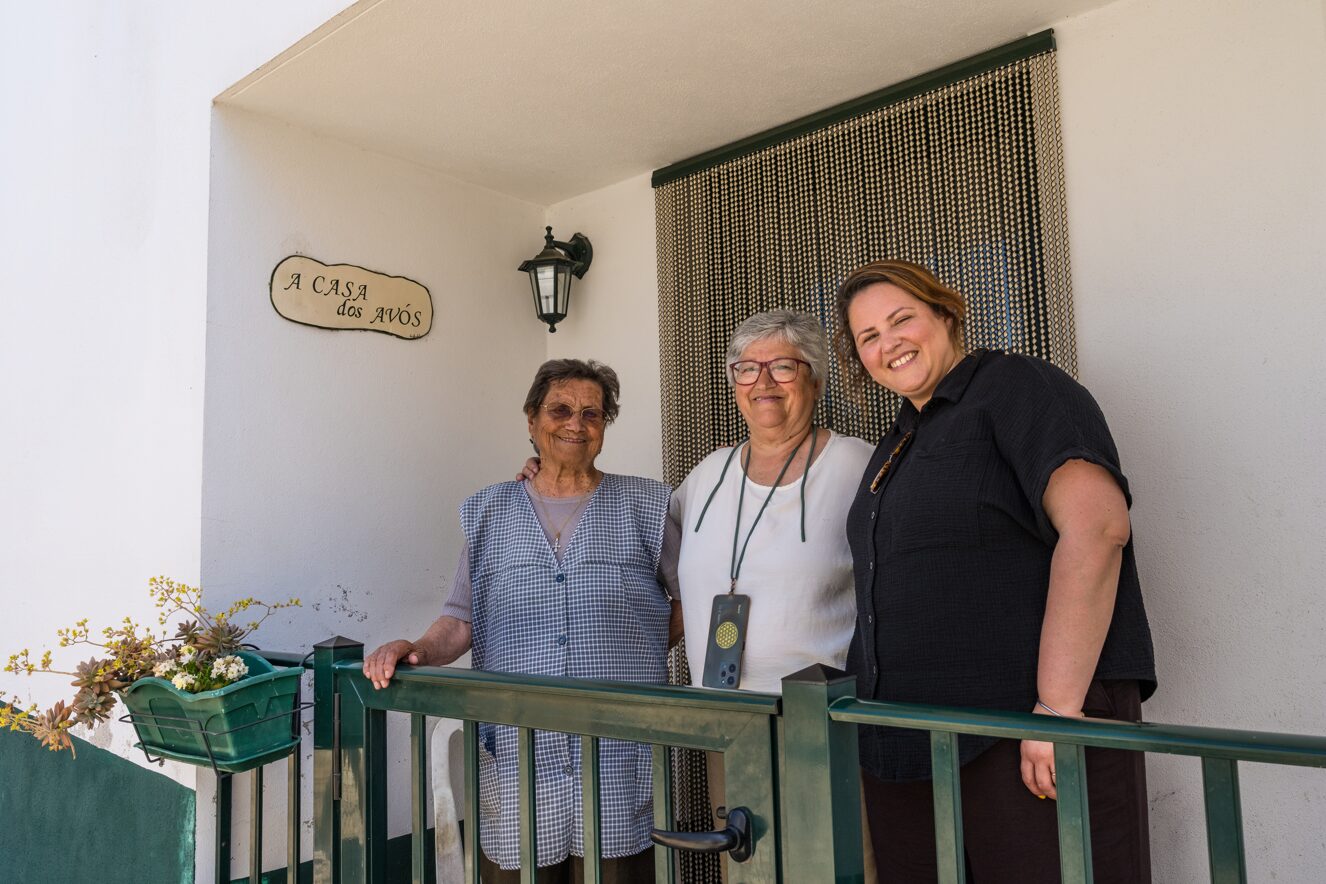
It is thanks to stories like Samuel and Marta’s that this territory continues to grow, not in massive numbers, but on its own scale and within its own means, with quality and connection, because people arrive who want to stay, who put down roots, who believe that the countryside has a future, this future. And that this future is built side by side with nature.
Celebrating their journey is celebrating what rewilding also seeks: to bring life back to ecosystems and the human communities that are part of them. In communion.